
The Multi-Vendor Challenge in Upstream Bioprocessing
Few modern bioprocess laboratories are built around technology from a single supplier.
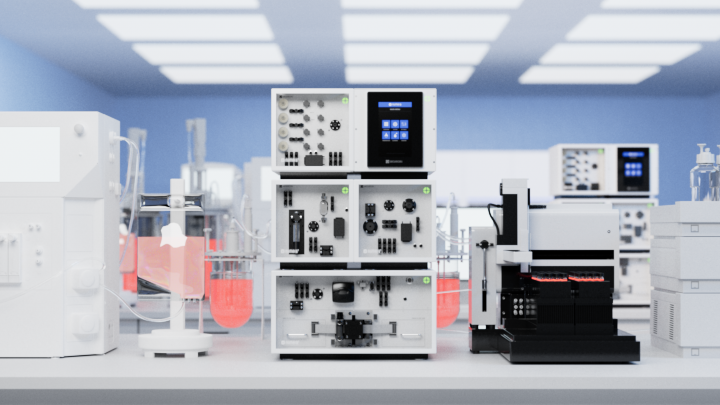
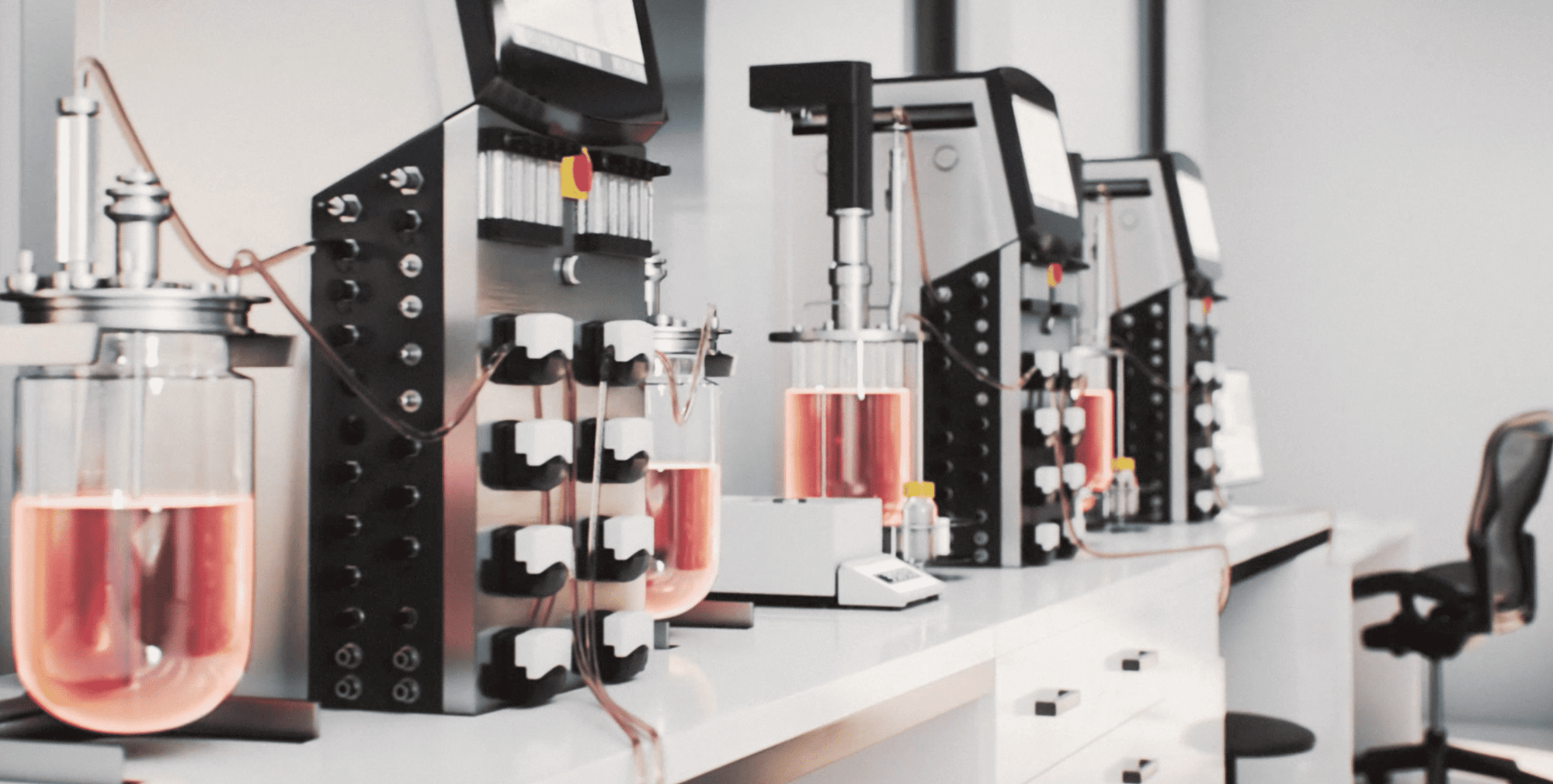
A typical upstream environment may contain benchtop bioreactors from several manufacturers, independent pumps and balances, biomass sensors, spectroscopy systems, cell counters, biochemical analyzers, chromatography equipment, automated sampling technologies, and specialized analytical software.
Each component can provide valuable information. The difficulty arises when these technologies need to work together.
Without an overarching integration layer, organizations can face:
-
fragmented process and analytical data;
-
manual transfer of measurements between systems;
-
inconsistent data structures and naming conventions;
-
repetitive operator tasks;
-
limited interoperability between equipment;
-
difficulties reproducing workflows across laboratories;
-
additional effort during technology transfer and scale-up;
-
barriers to advanced analytics, modeling, and AI.
This is why vendor-agnostic bioprocess software has become increasingly important. The goal is not simply to visualize data from multiple instruments. It is to establish a common digital layer through which devices, processes, analytics, and operators can interact.
Lucullus is designed around this principle.
Through device-specific integrations and standardized interfaces such as OPC UA and REST API, equipment and software from different suppliers can become part of a coordinated environment. Lucullus can therefore act as the connecting layer between bioreactor control, process analytics, data management, and external applications. Its REST API also enables structured process information to be exchanged with applications such as data-analysis environments, ELNs, MES solutions, and specialized modeling software.
Pillar 1: Centralized Upstream Bioprocess Data Management
Data becomes significantly more useful when it has context.
A dissolved oxygen value alone has limited meaning. Its value increases when it can be associated with the correct process, reactor, batch, timestamp, control action, sample, analytical result, media preparation, and process phase.
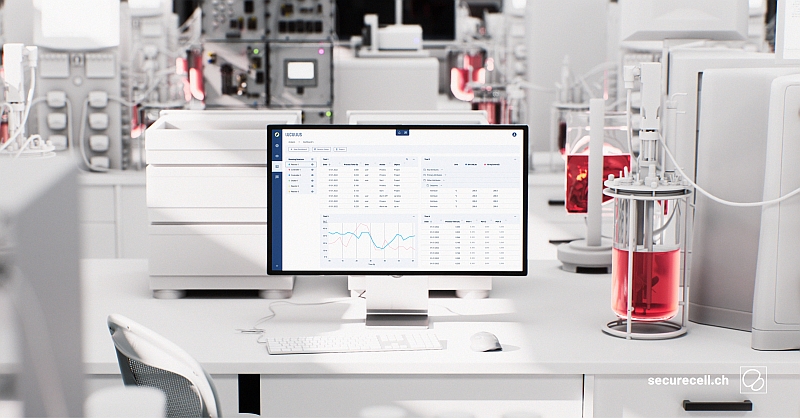
Lucullus brings real-time and historical information from connected equipment into a centralized data environment. Instead of treating bioreactor data, analytical results, and process metadata as isolated datasets, information can be organized around the process itself.
This creates a more complete digital record of what happened during a cultivation.
For bioprocess engineers, centralized bioreactor data management provides greater process transparency. For data scientists, consistently structured information reduces the preparation required before modeling. For laboratory managers, centralized data can reduce dependence on manually maintained spreadsheets and disconnected instrument exports.
It also establishes an important foundation for more advanced digital strategies.
Creating data that can support AI and machine learning
AI and machine learning cannot compensate for poor underlying data architecture. Models require datasets that are accessible, structured, consistently named, contextualized, and sufficiently complete.
This concept is explored in Securecell's webinar “Enabling AI-Driven Bioprocessing Through FAIR Data.” The webinar shows how connecting hardware, software, and contextualized process data can create higher-quality datasets for advanced analytics and AI/ML applications.
For organizations developing longer-term digitalization strategies, this is an important distinction. The immediate benefit of centralized data management is improved process transparency. The longer-term benefit is the creation of an infrastructure from which advanced analytics, predictive models, and increasingly autonomous process strategies can develop.
|
Recommended viewing: Explore Enabling AI-Driven Bioprocessing Through FAIR Data on the Securecell Insights page. |
Pillar 2: Moving from Monitoring to Advanced Process Control
Collecting process data is valuable. Acting on it automatically creates another level of value.
Lucullus combines data acquisition with upstream process automation, allowing users to develop control strategies that extend beyond individual bioreactor controllers.
Processes can be structured using configurable operations and step chains, allowing control recipes to respond to process events and execute actions according to defined conditions. Securecell describes these step chains as interconnected command blocks that support event-based process control.
This enables workflows such as:
- automatically changing setpoints when defined process conditions are reached;
- coordinating pumps, balances, reactors, and analytical devices;
- executing feed strategies;
- performing online calculations;
- triggering sampling according to time or process events;
- responding to analytical measurements;
- coordinating multiple operations simultaneously.
The result is more than automated equipment. It is automated process logic across equipment boundaries.
Reducing repetitive operator intervention can improve reproducibility and allow scientists to spend more time on process development rather than process execution.
Precision feeding as a practical example
A strong example is described in “Implementing Gravimetric Feed Control in Perfusion-Based Cell Culture Processes.”
In collaboration with Safi Biotherapeutics, a Lucullus-based control strategy was developed for perfusion processes in which corrections were based on cumulative medium delivery rather than instantaneous feed rate.
The approach was designed to compensate for challenges including pump drift, measurement noise, changing hydraulic conditions, feed-container exchanges, and changes to feed setpoints. During live cultivations, the strategy achieved stable regulation of cumulative feed delivery.
The example demonstrates an important advantage of an overarching bioprocess control software platform: data from multiple devices can become inputs to higher-level control logic rather than remaining isolated measurements.
|
Recommended reading: Read Implementing Gravimetric Feed Control in Perfusion-Based Cell Culture Processes on Securecell Insights. |
Pillar 3: Digitalizing the Workflow Beyond the Bioreactor
A bioprocess does not begin when the reactor starts and end when the cultivation stops.
Planning, media preparation, sampling, analytical measurements, process execution, and evaluation are all part of the same experimental or manufacturing workflow.
Lucullus therefore extends digitalization beyond conventional SCADA functionality.
Process planning
Process information can be prepared before execution, helping organizations establish repeatable workflows and reducing the need to reconstruct process information manually for every run.
Standardized process structures can also support technology transfer. Instead of transferring only written procedures between laboratories or scales, organizations can increasingly transfer digital process definitions and control strategies.
This is particularly valuable when processes evolve from early development toward pilot-scale or manufacturing environments.
Digital media preparation
Media preparation can be incorporated into the digital workflow, helping connect preparation activities with the processes in which those materials are subsequently used.
This contributes to process traceability while reducing reliance on disconnected paper instructions and spreadsheets.
Sample management and PAT integration
Sampling represents another frequent break in the digital process chain.
A sample may be removed from a reactor, labeled manually, transported to an analyzer, measured, and eventually associated with process data. Every manual transfer creates additional work and another opportunity for transcription errors or lost context.
Lucullus sample management allows samples and associated analytical information to be incorporated into the wider process record. Barcode-based identification can support traceable sample workflows, while integrations with analytical instruments can bring offline or at-line results back into the process data environment.
When combined with the Numera® automated sampling system, sampling can be further automated. Samples can be collected from connected bioreactors, processed where required, and transferred to compatible analyzers, reducing manual handling and increasing sampling frequency.
This connection between automated sampling, analytics, and process data is particularly important for PAT integration.
The recorded presentation “Advancing PAT Through Automated Sampling and Online Analytical Integration” explores practical workflows using automated sampling, chromatography, and at-line analytical technologies. The presented approach illustrates how shortening the delay between process sampling and analytical results can make data available when it is still relevant to process decisions.
|
Recommended viewing: Watch Advancing PAT Through Automated Sampling and Online Analytical Integration on Securecell Insights. |
One Digital Backbone for Connected Upstream Bioprocessing
The future of upstream bioprocessing will involve more sensors, more analytics, more sophisticated models, and increasing levels of automation.
Simply adding technologies, however, does not create a digital bioprocess.
The real value comes from connecting them.
Lucullus provides a vendor-agnostic digital backbone through which bioreactors, standalone devices, PAT technologies, analyzers, process data, sampling workflows, and automation strategies can operate as parts of one environment.
For bioprocess engineers, this means more powerful and reproducible automation.
For laboratory managers, it means fewer fragmented systems and less manual coordination.
For data scientists, it means structured and contextualized datasets that are more accessible for advanced analytics.
For facility and automation teams, it means an architecture that can grow with changing equipment, processes, and organizational requirements.
Ultimately, effective upstream bioprocess data management is not just about storing more information. It is about creating a continuous digital thread from process planning and media preparation through cultivation, PAT, sampling, analysis, control, and process evaluation.
That is where Lucullus moves beyond conventional monitoring software: one platform for control, data, integration, and automation across the bioprocess lifecycle.
Explore Connected Bioprocessing with Securecell
Discover additional application notes, webinars, technical articles, and real-world examples on the Securecell Insights page, including resources on Quality by Design, FAIR data and AI, advanced process control, automated sampling, PAT integration, and bioprocess digitalization.
To discuss how Lucullus® could integrate with your existing bioreactors, analytical technologies, and data infrastructure, contact the Securecell team or request a demonstration of Lucullus®.