

What Is Lucullus® and How Does It Address This Challenge?
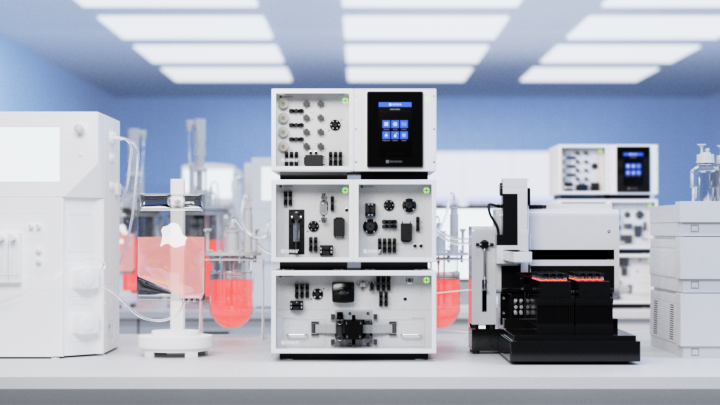
Lucullus® is a vendor-agnostic bioprocess control and data management platform designed to connect heterogeneous laboratory environments within one centralized software architecture.
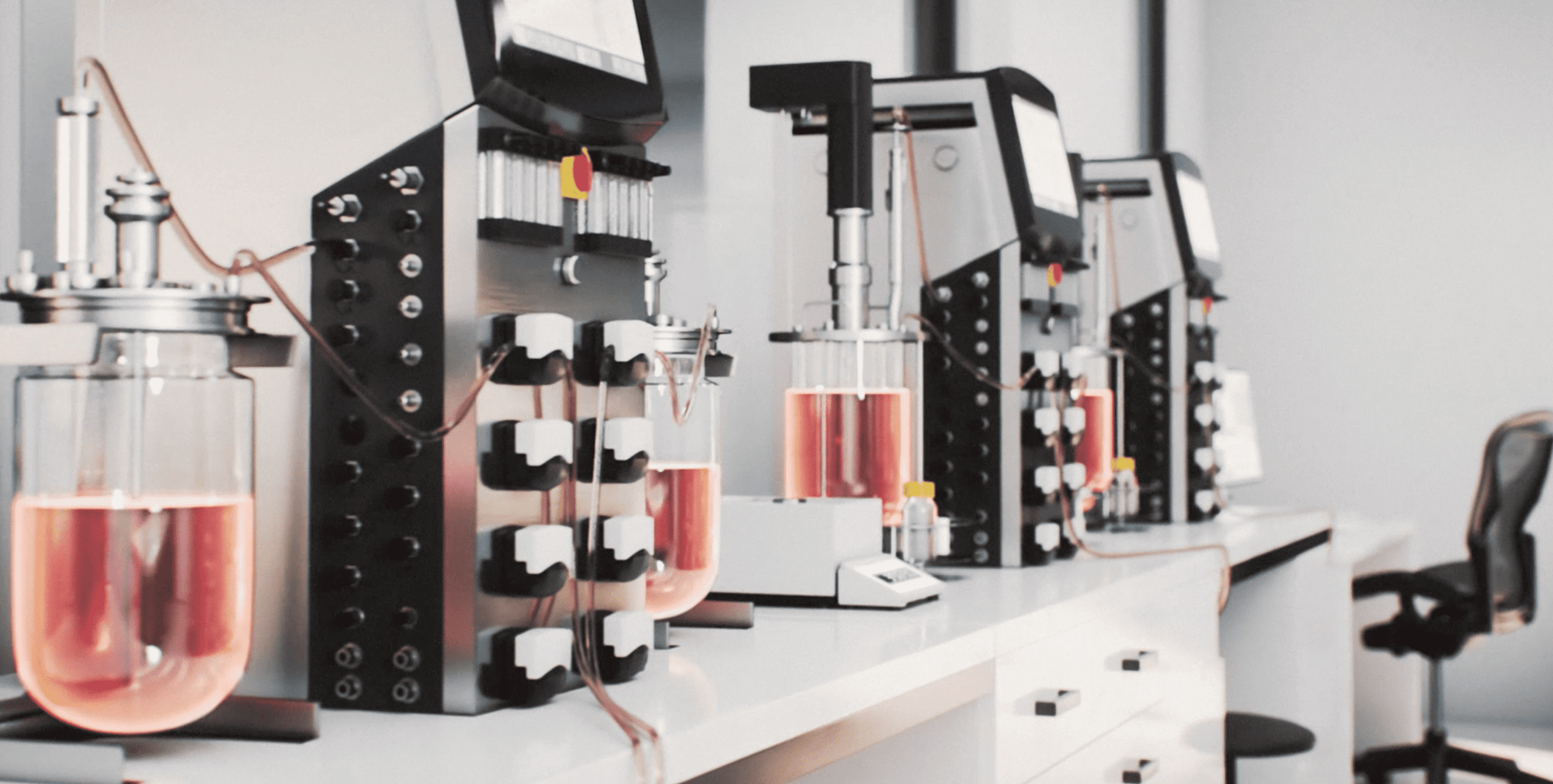
Instead of replacing existing equipment, Lucullus can integrate bioreactors, PAT sensors, analyzers, pumps, balances, and sampling technologies from different manufacturers.
This provides one environment for:
- Monitoring and controlling multiple processes
- Managing recipes and automation strategies
- Centralizing process and analytical data
- Comparing current and historical runs
- Coordinating samples, materials, and process information
- Connecting data with external analytics and modeling tools
Read more: Navigating for the Ideal Bioprocessing Software Solution
How Can Lucullus® Standardize Process Control?
Lucullus provides SCADA functionality for both routine monitoring and advanced process control.
Process engineers can define sequences and control strategies triggered by time, process events, calculations, or changing process conditions.
Typical applications include:
- Automated phase transitions
- Dynamic setpoint changes
- Scheduled or event-triggered feeding
- Linear and exponential feed profiles
- PID-based control
- Notifications and feedback loops
This allows process knowledge to be translated into reproducible digital workflows rather than relying on manual operator actions.
Why Does an Integrated Digital Bioprocess Platform Matter?
Bioprocess digitalization is not only about connecting devices. Its real value comes from connecting process control, data, workflows, analytics, and decision-making within one coordinated environment.
Lucullus® creates this foundation by collecting information from different process and analytical systems and storing it in a centralized, structured, and contextualized form. Interfaces such as OPC UA and REST APIs enable data exchange with databases, enterprise systems, and advanced analytical platforms.
This centralized data backbone is important for applications such as Quality by Design, Process Analytical Technology, advanced analytics, digital twins, and AI. These approaches depend on reliable data that remains linked to its process context rather than being distributed across isolated systems.
Lucullus also extends digitalization beyond direct bioreactor control. Process planning, media preparation, sample management, analytical measurements, and automated sampling can be integrated into the same workflow. Samples can remain linked to their originating process, while technologies such as Numera® can connect sampling, analysis, and subsequent process actions.
This creates the basis for an integrated PAT workflow:
Measure → Analyze → Interpret → Act
The same architecture also allows organizations to use specialized analytical environments such as DataHowLab, MATLAB, Python, databases, and other modeling tools while maintaining a consistent bioprocess data backbone.
Practical applications demonstrate how this approach can translate into real process improvements. In collaboration with Safi Biotherapeutics, for example, a Lucullus-based gravimetric feed-control strategy was developed for perfusion cell culture. Feed delivery was corrected based on cumulative mass, helping compensate for pump drift, measurement limitations, and changing hydraulic conditions.
Similarly, integration between Lucullus® and automated sampling technologies such as Numera® can connect the originating bioreactor, sample identity, analytical result, and subsequent control actions within one digital workflow.
Ultimately, this is why an integrated platform matters for Bioprocessing 4.0: equipment, workflows, process data, analytics, and automation can operate as parts of one connected system rather than as isolated technologies.
Real-World Applications and Case Studies
Quality by Design in Bioprocessing – From Critical Parameters to Digital Twin Implementation
Explore how structured process data, critical process parameters, and critical quality attributes can support QbD strategies and form the basis for digital twin development.
Application Note: Implementing Gravimetric Feed Control in Perfusion-Based Cell Culture Processes
See how Lucullus® was used to implement a gravimetric feed-control strategy for perfusion cell culture and translate process knowledge into advanced automation.
Webinar: Advancing PAT Through Automated Sampling and Online Analytical Integration
Discover how automated sampling, online analytics, and process control can be connected to create more integrated PAT workflows.
Webinar: Enabling AI-Driven Bioprocessing Through FAIR Data
Learn why structured, contextualized, and accessible bioprocess data is essential for machine learning, AI applications, and more advanced data-driven process development.
Explore Lucullus®
Learn more about Lucullus® capabilities for vendor-agnostic bioprocess control, automation, data management, and digitalization.