



Why timely analytical information matters for PAT
FDA’s process analytical technology framework describes an approach to designing, analyzing, and controlling manufacturing through timely measurements of relevant quality and performance attributes. Process understanding is central to that framework. [1]
Routine in-line measurements such as pH, dissolved oxygen, and temperature provide important information, but many questions require additional analytical methods. Cell concentration, viability, nutrient concentrations, product titer, and selected product attributes can require different instruments and preparation steps. Their roles as process indicators, parameters, or quality attributes depend on the process and control strategy.
The PAT literature consequently treats instrument integration and data management as connected requirements. A measurement becomes more useful when its relationship to the process is clear and it reaches the scientist or control system in time to support action. [2]
The advantages over manual offline workflows
A traditional workflow links collection, transport, preparation, analysis, and reporting through people and laboratory schedules. Each step may work well individually, while the overall sequence still leaves gaps or delays.
Automated online sampling reduces those coordination burdens. It enables predefined collection outside working hours and transfers samples to connected instruments without repeated manual transport. Standardized preparation can reduce operator-dependent differences. Automatic data exchange can reduce transcription and sample-association errors when identifiers and interfaces are correctly implemented.
The resulting benefit is broader than labor savings. More consistent observation times make parallel cultures easier to compare. Faster access to results can help scientists investigate an emerging deviation or adjust an experimental strategy while it is still relevant.
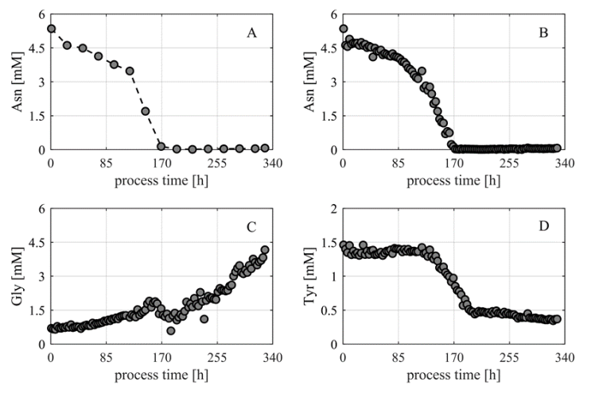
Hofer and colleagues evaluated a Numera-based sampling and analytical workflow in CHO cultivation. Their study illustrates how increased sampling frequency can improve the information available for interpreting culture metabolism and identifying process events. It also examines the trade-off between analytical performance and measurement frequency. This is peer-reviewed application evidence involving an earlier Numera configuration, rather than a universal performance claim for the current platform. [3]
Match sample preparation to the analytical question
A PAT strategy may require several measurements from the same culture. Those measurements do not necessarily need identical samples.
A cell counter requires the relevant cell population to remain in suspension. A biochemical or chromatographic method may require dilution, removal of cells, reagent addition, or a different sample volume. The workflow should specify the preparation required for each destination and whether processing changes the measurand or recovery.
For example, cell-free preparation can simplify analysis of soluble components, but membrane selection and analyte recovery must suit the method. Cooling can support storage of suitable analytes, while time-sensitive measurements may require prompt analysis or a defined stabilization procedure. Collection into a cold vial alone does not establish preservation for every assay.
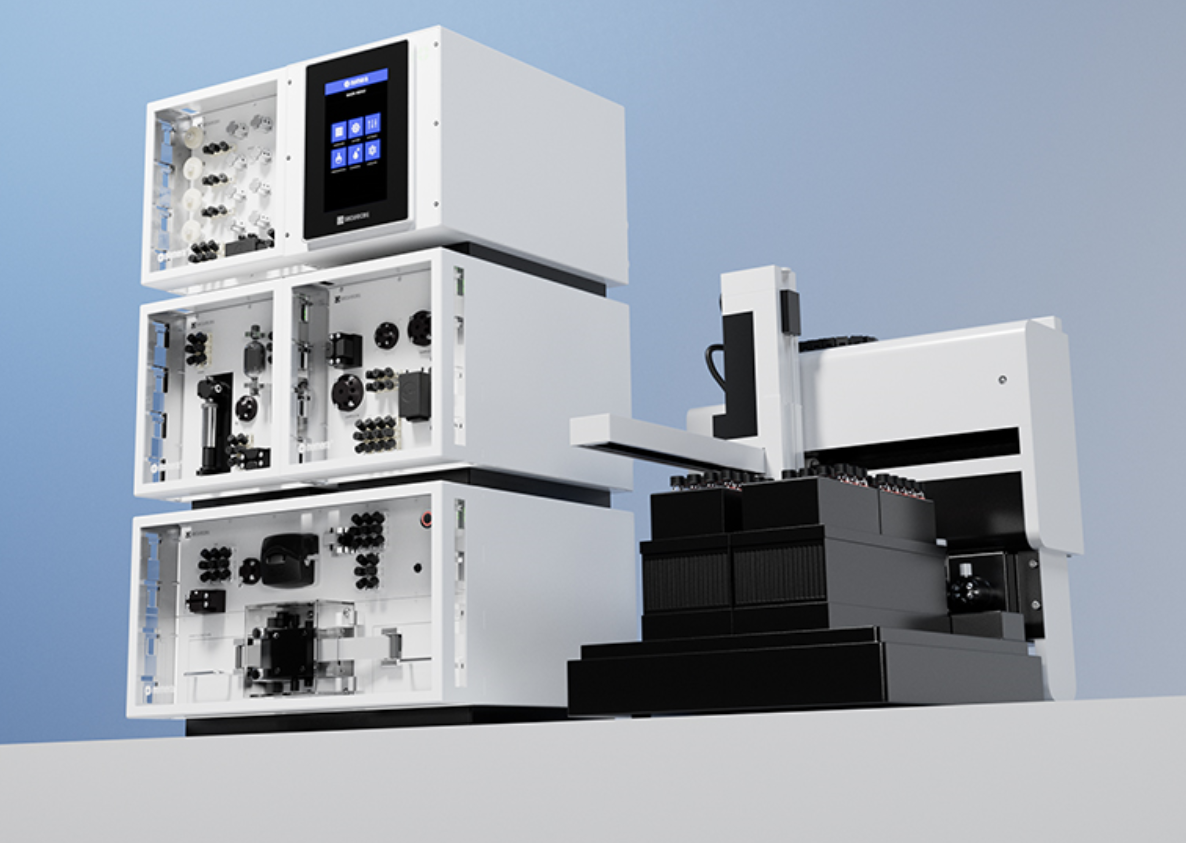
Numera 3 offers modular dilution, filtration, and analytical routing, including fresh membrane sections for individual filtration cycles. This supports different preparation pathways within a connected sampling architecture. Suitability and recovery should be established for the selected cell culture and analytical methods. [4]
Measure the delay from collection to a usable result
Sampling frequency and information availability describe different aspects of performance. A system may collect samples frequently while an analyzer queue delays their results.
For implementation, record the actual collection time, analyzer measurement time, and time when the result becomes available to the process application. Compare that delay and its variability with the dynamics of the process decision. A result that is useful for following a slow trend may be too old for responding to a rapid excursion.
An illustrative example shows the distinction. A glucose sample collected at 10:00 and released to the process system at 10:20 represents the culture at approximately the collection time, subject to any transport and preparation effects. Plotting it as though it described the culture at 10:20 can misalign it with feeding events or other measurements.
For shared installations, assess the full queue: reactor selection, transfer, preparation, assay duration, cleaning, and competing analytical requests. Ask for demonstrated performance with the intended source and destination configuration.
Preserve the context of every analytical value
A useful analytical record needs the reactor and batch identity, sample identity, collection time, analytical method, units, and any dilution factor. It should also retain the measurement status and relevant quality flags. Failed analysis and out-of-range results need explicit handling.
These requirements should be specified during interface design. A physically connected instrument may still require manual data reconciliation. Verify that results arrive with the expected identity and units, including after interrupted communication or a repeated measurement.
Lucullus supports coordination of time- and event-based sampling, analytical methods, online measurements, centralized data, and feedback workflows with Numera. Its role is to connect analytical observations with process execution and interpretation. The exact interfaces and behavior should be defined for the selected instruments and project. [5]
Strengthen Raman models with suitable reference measurements
Automated sampling also supports in-line PAT tools. Raman models, for example, need trustworthy reference data linking spectral measurements to the quantities being predicted.
Reference data should cover relevant process conditions and be aligned with the spectra. Poor timing alignment or unsuitable reference measurements can weaken a model even when spectral acquisition performs well. Adding more observations of the same conditions also does not necessarily improve coverage of the intended operating space.
Graf and colleagues demonstrated integrated automated reference measurements and Raman acquisition in a multi-parallel mini-bioreactor system. Their work supports the importance of reducing mismatch between reference and spectral measurements during calibration. [6]
An automated sampling strategy can help collect reference measurements during important phases, feeds, or experimental variations. Model development still requires appropriate experimental design and validation on independent data relevant to the intended application. Automated sampling and in-line sensing can therefore complement one another throughout model development and subsequent verification.
Define the conditions for feedback control
Timely online measurements can support operator decisions, alarms, model updates, or automatic control. Each use requires a suitable level of measurement and integration assurance.
For example, an online glucose result could inform a supervisory feeding strategy if measurement uncertainty, collection-to-result delay, controller behavior, and process constraints have been evaluated. The implementation also needs a defined response to an analyzer fault or stale result.
Before enabling feedback, establish which results the controller may accept, how old they may be, and what operating limits apply. Verify behavior after failed dilution, missed samples, communication loss, and restart. A fallback strategy might retain an approved baseline feed or request operator intervention, depending on the process.
These are engineering design recommendations. Automated sample transfer establishes a route to analytical information; evidence from the complete implementation establishes whether that information is suitable for a particular control action.
The FDA Advanced Manufacturing Technologies context
FDA’s final Advanced Manufacturing Technologies Designation Program guidance, issued in December 2024, provides a further context for manufacturing modernization. It describes a designation pathway for methods using novel technology, or established technology in a novel way, that substantially improve drug manufacturing while maintaining or improving quality and meeting the program’s statutory criteria. Requests require supporting information for a defined context of use. [7]
Integrated sampling can contribute to a modernization strategy by improving access to process information and reducing manual interventions. That is an engineering interpretation of its role. The guidance does not confer AMT designation on automated samplers as a category or establish a Numera-specific regulatory status.
The practical connection is an emphasis on demonstrable benefit: show how the proposed workflow improves the relevant process and supports its intended quality objectives.
Evaluate the integrated workflow
Equipment selection should begin with the analytical decisions the laboratory needs to make. Compare proposed configurations against the same operational requirements.
|
Evaluation area |
Evidence to request |
|
Process coverage |
Achievable interval for each reactor with all planned methods active |
|
Sample preparation |
Dilution performance, recovery where relevant, and suitability for each destination |
|
Analytical integration |
Demonstration of fluid transfer, instrument coordination, and digital result exchange |
|
Timeliness |
Distribution of collection-to-result delays under realistic load |
|
Reliable operation |
Valid-result rate, carryover studies, unattended duration, and recovery from interruptions |
|
Process use |
Correct association of results with batches, alarms, and any intended control actions |
For laboratories combining several assays and reactor platforms, Numera and Lucullus provide a configurable route toward connected PAT workflows. Established applications and current integration projects should be evaluated separately. Securecell’s announced collaboration with Beckman Coulter Life Sciences, for instance, describes development of an automated Numera-to-Vi-CELL BLU transfer interface and Lucullus integration. It should be understood as a development program until the specific solution is released. [8]
Discuss the measurements, response times, and analytical instruments in your PAT strategy with Securecell to identify an appropriate sampling and data-integration workflow.
Frequently asked questions
Does automated sample collection make an analytical method online?
Automated collection into vials can still feed a later offline analysis. In this article, online analysis means automated transfer from the process to an integrated analytical instrument; in-line measurement takes place directly in the process without removing a sample. [1]
Can automated sampling replace Raman spectroscopy?
The approaches answer different needs and can work together. Sampling enables suitable reference assays and measurements that require preparation; Raman can provide frequent in-line predictions where a model has been established and validated. [5]
Does online sampling guarantee improved control or product quality?
It improves access to analytical information when correctly implemented. The effect on control and quality must be demonstrated for the process, analytical methods, and decision logic involved.
Further Reading & Resources
Explore how automated sampling, integrated analytics, and digital process control support advanced Process Analytical Technology (PAT) strategies.
- Numera® 3 – Advanced Automated Bioprocess Sampling
Discover how Numera 3 automates sampling, sample preparation, and analytical integration to enable reliable, high-frequency bioprocess monitoring. - Lucullus® – Bioprocess Management and Control Software
Learn how Lucullus connects bioreactors, analytical instruments, and process data within a centralized platform for monitoring, automation, and advanced process control. - Article 1 – The Advantages of Automated Bioprocess Sampling (Link to be added once published)
Explore how automated sampling improves data quality, reproducibility, and operational efficiency compared with traditional manual sampling methods. - Numera® & Lucullus® – An Integrated PAT Solution
Discover how automated sampling, online analytics, centralized data management, and feedback control work together to support integrated PAT strategies. - Securecell and Beckman Coulter Collaborate on Vi-CELL BLU Integration
Learn about the ongoing collaboration to integrate the Vi-CELL BLU Cell Viability Analyzer with Numera 3 and Lucullus, creating a connected workflow for automated cell culture monitoring.
References
[1] US Food and Drug Administration. PAT—A Framework for Innovative Pharmaceutical Development, Manufacturing, and Quality Assurance. Guidance for Industry. 2004. Read source
[2] Wasalathanthri DP, et al. Technology outlook for real-time quality attribute and process parameter monitoring in biopharmaceutical development—A review. Biotechnology and Bioengineering. 2020;117:3182–3198. Peer-reviewed review. Read source
[3] Hofer A, Kroll P, Barmettler M, Herwig C. A Reliable Automated Sampling System for On-Line and Real-Time Monitoring of CHO Cultures. Processes. 2020;8:637. Peer-reviewed experimental study; includes a Securecell coauthor and supplied equipment. Read source
[4] Securecell AG. Numera 3 product information. Supplier specifications and configuration descriptions, reviewed 30 October 2026. Read source
[5] Securecell AG. Lucullus SCADA software product information. Supplier description of sampling, sample management, and process control. Read source
[6] Graf A, et al. Automated Data Generation for Raman Spectroscopy Calibrations in Multi-Parallel Mini Bioreactors. Sensors. 2022;22:3397. Peer-reviewed experimental study; a different platform from Numera. Read source
[7] US Food and Drug Administration. Advanced Manufacturing Technologies Designation Program. Final Guidance for Industry. December 2024. Read source
[8] Securecell AG. Announcement of collaboration with Beckman Coulter Life Sciences on Vi-CELL BLU integration. 12 October 2026. Supplier development announcement. Read source


