
Reliability and Accuracy in Automated Bioprocess Sampling
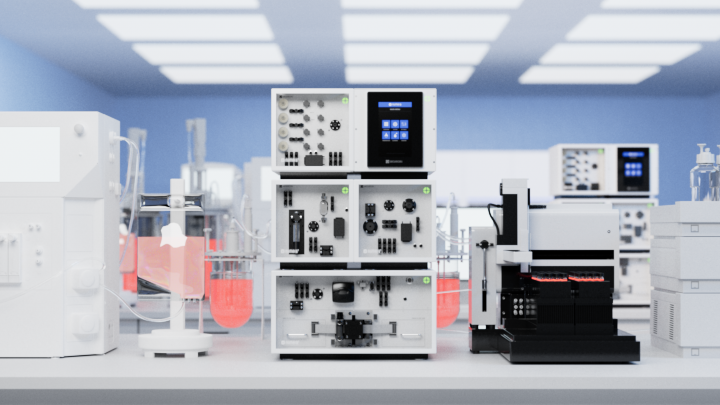
The first white paper, “Reliability and Accuracy in Automated Bioprocess Sampling”, summarizes the system verification of Numera® 3. It presents results covering key aspects of automated sample handling, including sample storage volumes, operation with a 10 m sample line, dilution accuracy, sample waste, filter tape handling, repeated filtration, and carry-over control.
The results demonstrate that Numera® 3 is more than an automated liquid-handling system. It is a verified platform designed to support reliable, reproducible, and analysis-ready bioprocess sampling.
Advanced Filtration in Automated Bioprocess Sampling
The second white paper, “Advanced Filtration in Automated Bioprocess Sampling”, focuses on the Numera® Tape Filtration Unit. Many bioprocess samples cannot be transferred directly from a bioreactor to an analytical instrument. Cell-containing samples often require clarification, dilution, or other preparation steps before analysis.
The white paper explains how Numera®’s filtration technology was evaluated and optimized using mammalian CHO cells and microbial yeast samples. It covers key parameters such as filter pore size, pressure, pump speed, circulation time, loop volume, dilution control, and repeated filtration performance.
Under defined CHO test conditions, Numera® achieved 99.9% cell removal efficiency. Repeated system testing also included 500 filtration cycles using yeast and CHO samples, demonstrating the suitability of the filtration workflow for defined mammalian and microbial bioprocess applications.
Supporting Data-Rich Bioprocess Development
Together, the two white papers show how automated sampling and sample preparation can help reduce manual handling, improve reproducibility, and support more consistent process data generation. They also highlight an important principle for successful implementation: sampling and filtration parameters should be selected according to the biological sample, analytical requirements, and intended process workflow.
These publications are intended for scientists, process development teams, automation specialists, and bioprocess engineers interested in automated sampling, sample preparation, filtration, and data-rich bioprocess monitoring.
To learn more about Numera® and its role in automated bioprocess sampling, visit:
For application-specific questions, technical discussions, or to evaluate how Numera® could support your bioprocess workflow, please contact the Securecell team: