

Introduction
Recombinant adeno-associated viruses (rAAVs) are among the most important tools to deliver genetic material in vivo to targeted cells. The high vector doses required for systemic administration have highlighted the limitations of current rAAV manufacturing processes, particularly in terms of scalability and productivity (Li & Samulski, 2020). The manufacturing strategies employed in approved AAV gene therapies are mainly based on two platforms: the domain’s gold standard HEK293 transient transfection system, and the large-scale Sf9 insect cell–baculovirus expression system.
The conventional HEK293 platform offers operational flexibility but is limited in scalability, productivity, stability, quality, and cost-effectiveness (Chahal et al., 2014; Fu et al., 2023). On the contrary, the Sf9 system is highly scalable but poses challenges in product quality control (Rumachik et al., 2020). The HEK293-based AAV production platform is currently used in most clinical and commercial applications. Numerous limitations have been overcome, such as the transition from adherent to suspension-adapted HEK293 cells and the implementation of high-cell-density fed-batch and perfusion processes, which increased volumetric productivity. Despite these advances, key bottlenecks remain in achieving consistent full-to-empty capsid ratios, minimizing non-vector DNA packaging, and ensuring robust scalability across different vector designs (Charan et al., 2025; Moldavskii et al., 2025; Woods, 2024).
Addressing these remaining challenges will require not only innovations in molecular and cellular engineering but also a fundamental improvement in process understanding and hence, the quality and density of process data generated during upstream development. A critical bottleneck in HEK293-based AAV manufacturing is the limited availability of process insights resulting from low-frequency sampling, fragmented process data, and conventional PAT strategies. Manual sampling introduces temporal inconsistencies and operator-dependent variability, increases the risk of contamination, and, most importantly, restricts real-time process monitoring and control. Overcoming these limitations may uncover critical links between process conditions and product quality attributes and contribute to the development of more efficient AAV production platforms.
Automated sampling enables high-frequency, reproducible, and precisely time-stamped data acquisition throughout the entire bioprocess. In the context of AAV production, this capability is particularly valuable given the dynamic nature of HEK293 fed-batch and perfusion cultures, where cell density, viability, and metabolite concentrations evolve continuously and cannot be fully captured through low-frequency manual sampling.
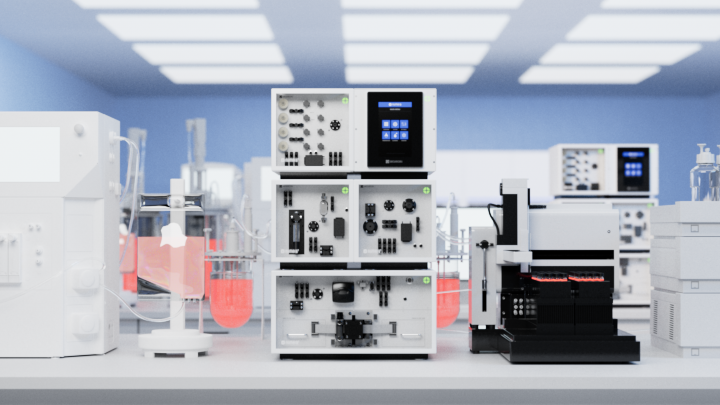
Beyond improving data quality, automated sampling supports the generation of structured, high-density datasets that are well suited for advanced statistical analyses and machine learning applications. As model-informed process development becomes increasingly adopted in biopharmaceutical manufacturing, the availability of accurate, contextualized, and consistent process data is essential for building robust predictive models and accelerating process optimization across different vector designs and manufacturing scales. In this context, Numera® provides an automated, standardized sampling workflow that improves data integrity, reduces operator burden, enables more reliable process characterization, and facilitates real-time data-driven decision-making throughout AAV process development.
AAV Production Optimization Platform
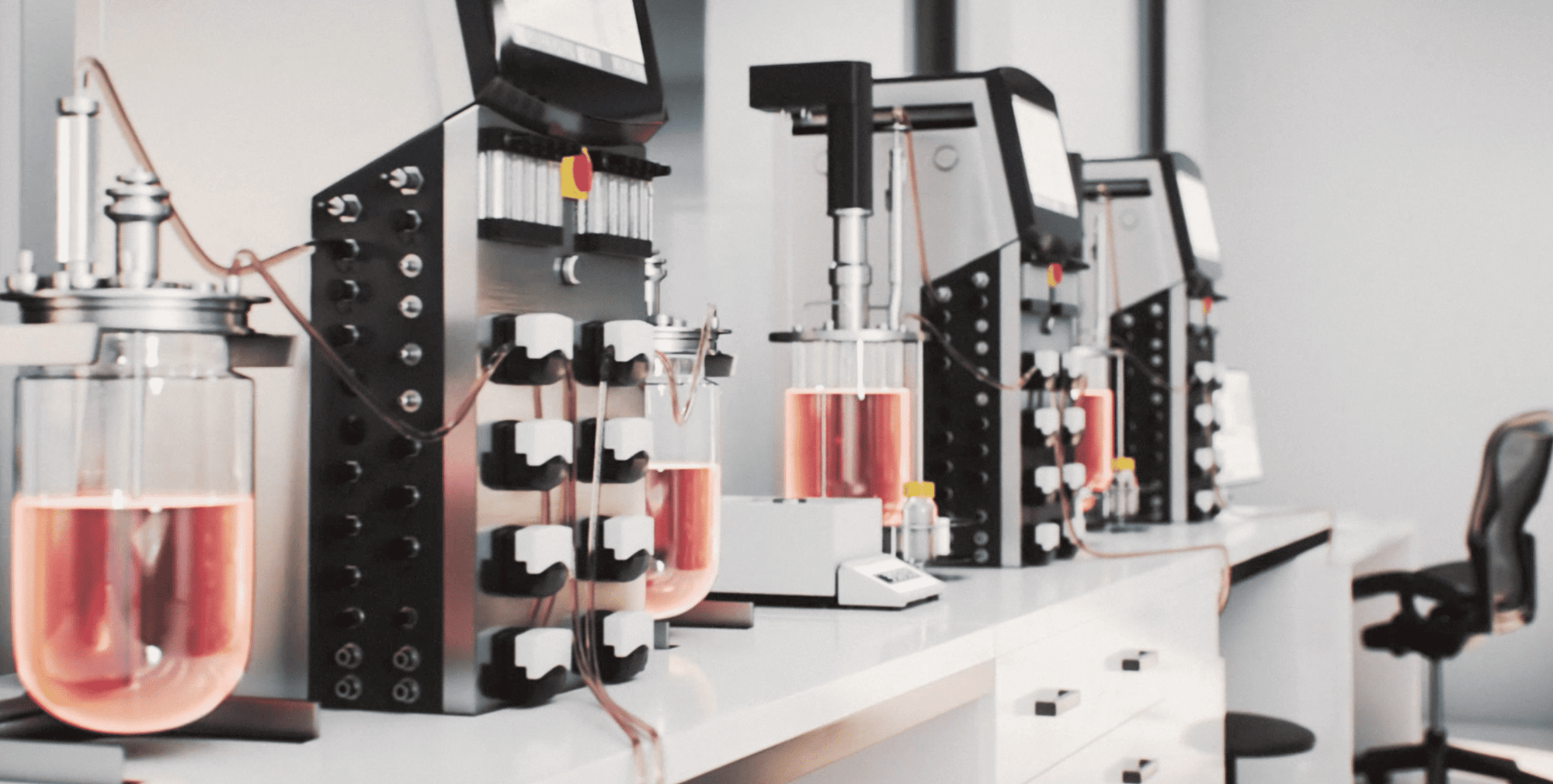
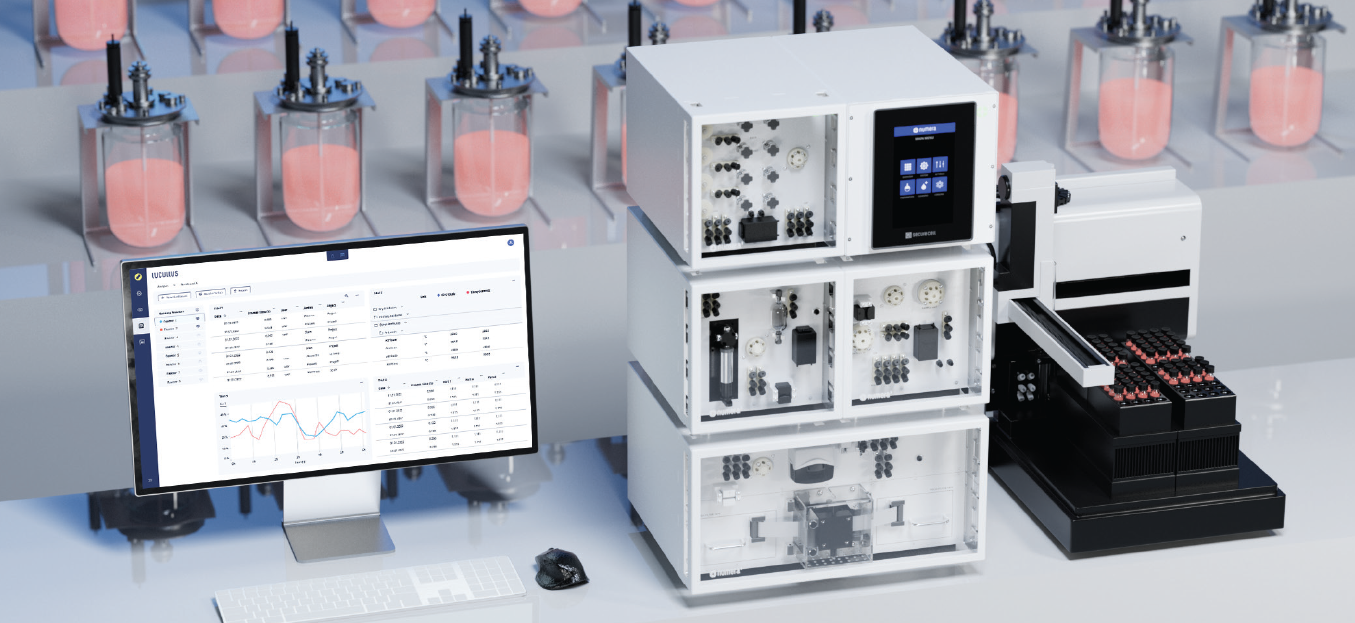
To optimize AAV production at scale, a dedicated platform was built around two Eppendorf DASbox® systems, each running four 250 mL bioreactors, accounting for eight bioreactors in total, all monitored in parallel.
Managing sampling across a system of this size would typically have meant manual intervention at every vessel, multiplying both hands-on time and the risk of inconsistency between runs. Numera® eliminated that bottleneck: a single autosampler was connected to all eight bioreactors, automating both sampling and sample dilution across the entire platform.
From there, Numera® routed each sample where it was needed. Samples destined for manual analysis were delivered to a temperature-controlled collection station, preserving sample integrity until they were ready for testing. Instead, samples for automated analysis were sent directly to a cell counter, metabolite analyzer, or A-TEEM system. This arrangement demonstrates how Numera® can adapt to different sample management requirements and integrate with numerous third-party devices.
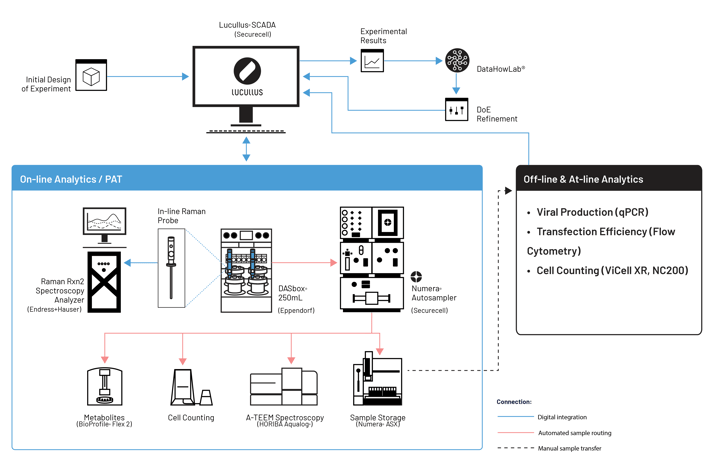
Figure 1: AAV Production Optimization Platform for a model-informed Design of Experiments (DoE) approach, including automated sampling, on-line, off-line, and at-line analytics. Numera® was used to automatically collect, process, and transfer samples to a set of analyzers, while Lucullus® orchestrated the entire ecosystem and managed data exchange and feedback control.
Multivariate Design of Experiment
Rather than testing one variable at a time, the study was structured around a Design of Experiments (DoE) study built on Latin Hypercube Sampling, a method that efficiently distributes runs across a multidimensional design space while minimizing the total number of experiments needed. The results of the DoE were incorporated into a hybrid bioprocess model developed by DataHow, which was used to design the next DoE (if you are interested in more details on this part, please read AN024 Lucullus® for Real-Time Process Control, CQA Modelling, and Design of Experiments: A Case Study in AAV Production. This iterative workflow was repeated over three DoE campaigns.
This approach made it possible to evaluate six parameters simultaneously and assess their impact on AAV productivity:
-
Post-transfection temperature
-
Pre- and post-transfection pH
-
Timing of the pH shift
-
Glucose and lactate setpoints
-
Plasmid DNA:cell ratio
-
Cell line
To capture the full picture, bioprocess, metabolite, and cell growth profiles were continuously monitored throughout each run, complemented by analytical characterization to evaluate both the quality and quantity of viral production.
Culture conditions
Dissolved oxygen was held constant at 40%. Post-transfection pH and temperature were adjusted according to each experimental run's design point. Temperature was explored across a broad range, from 30°C to 37.5°C, allowing the platform to capture the full effect of post-transfection temperature on productivity. pH was varied between 6.6 and 7.3, with the timing of the pH shift itself tested across a window of 0 to 20 hours post-transfection.
Sampling Throughput
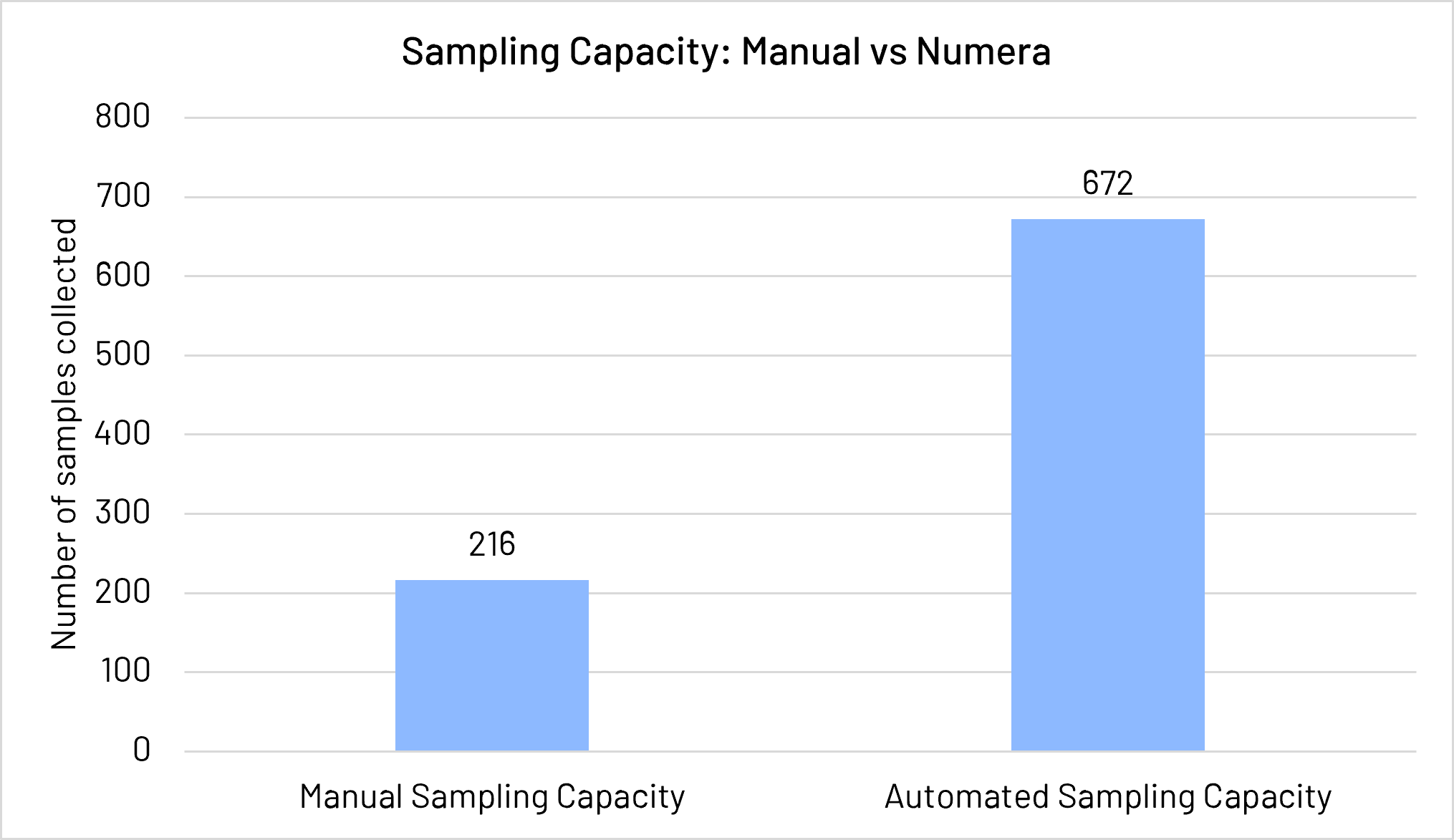
Over the course of three Design of Experiment studies, Numera® collected 672 samples and distributed them as described in the following table:
| Total samples: | Numera® transferred the samples to: |
| 168 | Nova Biomedical BioProfile® FLEX2 |
| 168 | Cell Counter |
| 168 | HORIBA aqualog® A-TEEM spectrophotometer |
| 168 | Sample collector (for at-line or off-line analysis) |
As a reference, the estimated customer’s manual sampling capacity over an equivalent campaign duration would have allowed to collect 216 samples. This means that Numera® tripled the customer’s sampling capacity (Figure 2).
Metabolic Profiles
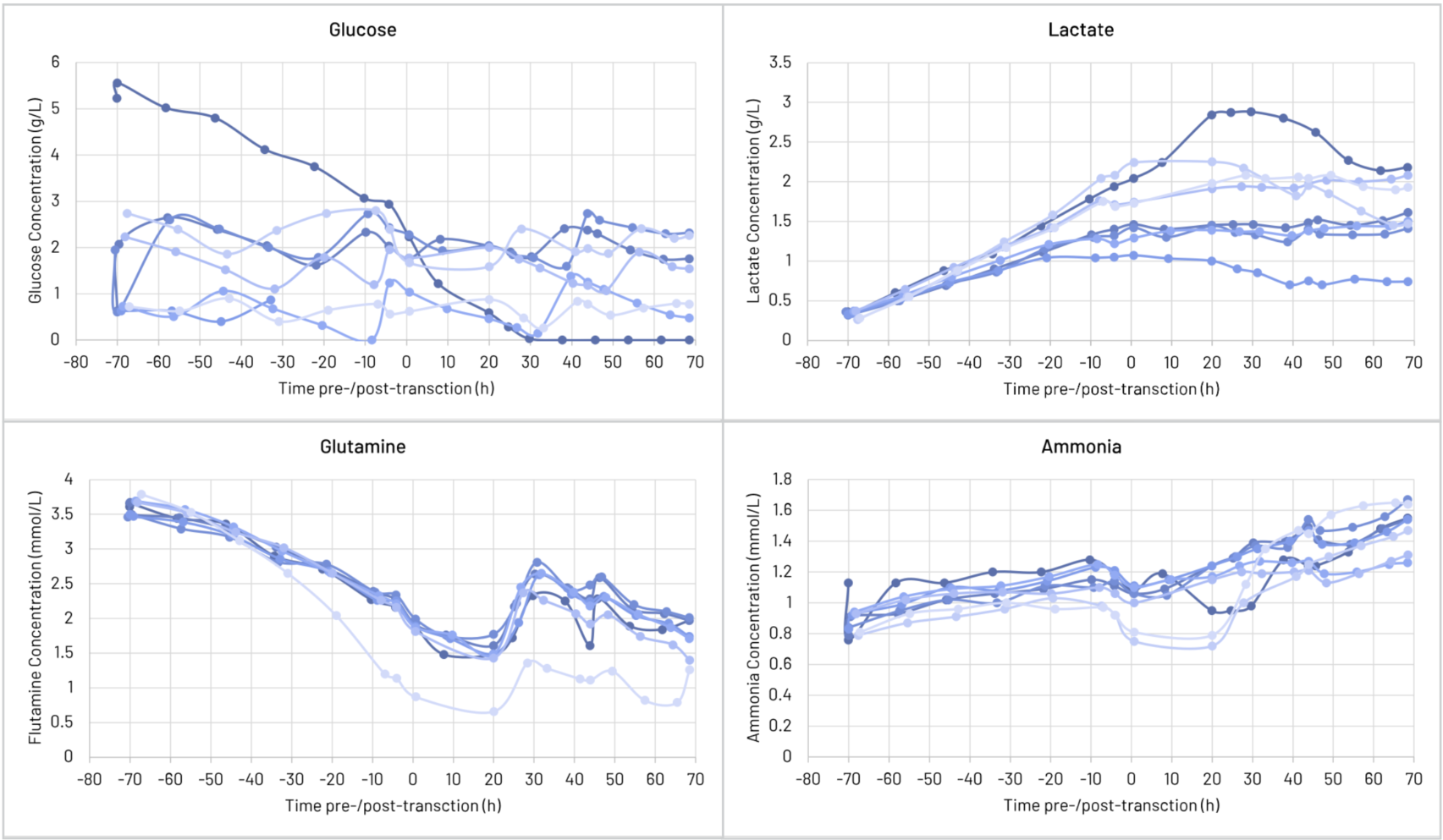
Glucose, Lactate, Glutamine, and Ammonia were regularly checked with different analyzers: in-line Raman and on-line BioProfile® FLEX2.
Glucose feeding was controlled in real-time by an Endress+Hauser Rxn2 Raman Analyzer integrated with Lucullus®. The feeding control logic was based on a Proportional–Integral–Derivative (PID) controller and a chemometric model (please read the AN024 Lucullus® for Real-Time Process Control, CQA Modelling, and Design of Experiments: A Case Study in AAV Production to learn more about this).
Glucose and Lactate levels depend on the PID control and the applied chemometric model, while Glutamine and Ammonia profiles highlighted the metabolic differences between the two evaluated cell lines (Figure 3).
Cell Growth
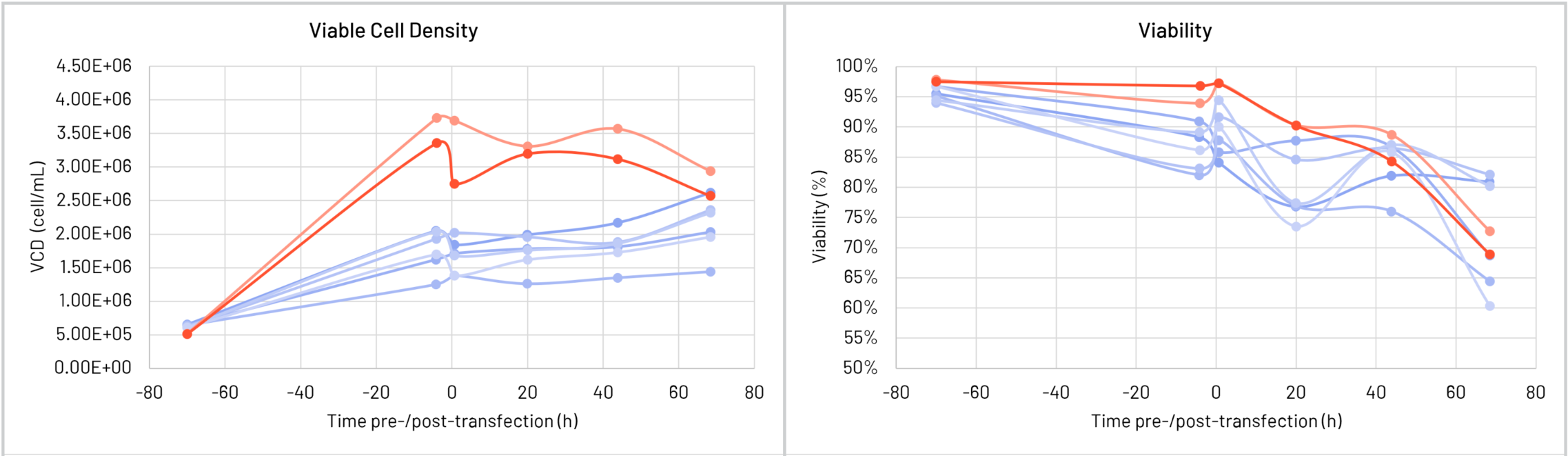
Viable cell density (VCD) and viability were tracked using both on-line and off-line integrated cell counters, giving continuous visibility into culture health throughout each run. In Figure 4, the viability obtained from manual and automated samples was compared across different dilution levels.
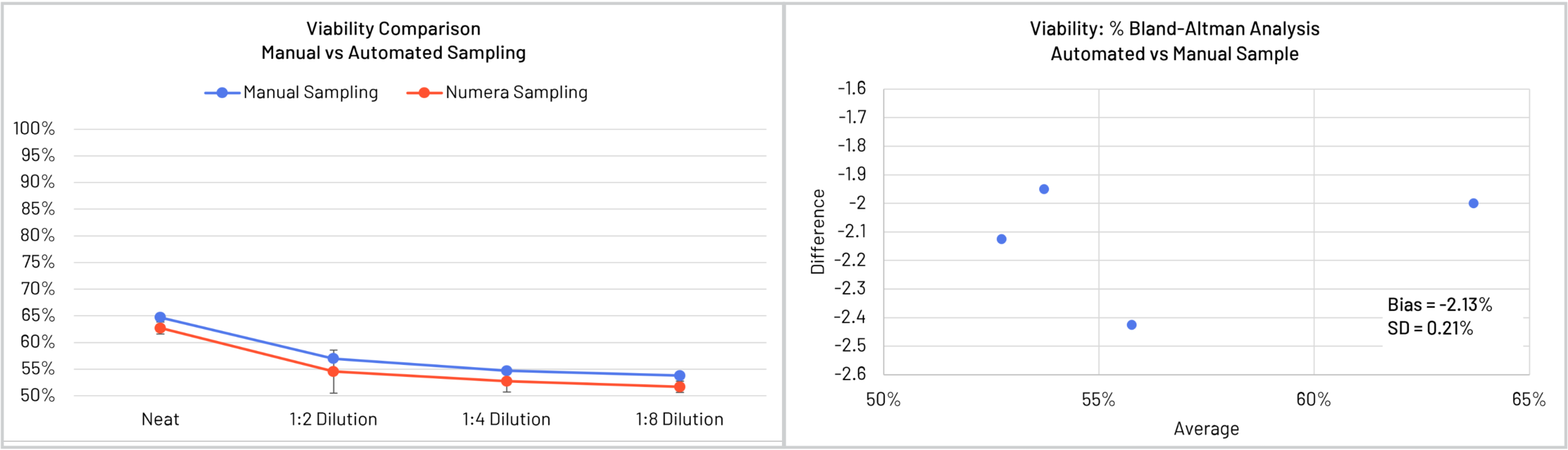
No meaningful differences were observed between the two sampling methods under any dilution condition. This was confirmed by Bland-Altman analysis, a statistical method used to assess the agreement between two analytical methods. The automated sampling method showed a bias of -2.13% relative to the manual method, indicating strong alignment and supporting the interchangeability of the two sampling approaches.
Overall, the growth data pointed to a clear conclusion: one cell line showed superior growth potential over the other, identifying the stronger platform of the two for AAV production (Figure 5).
Viral Production Results
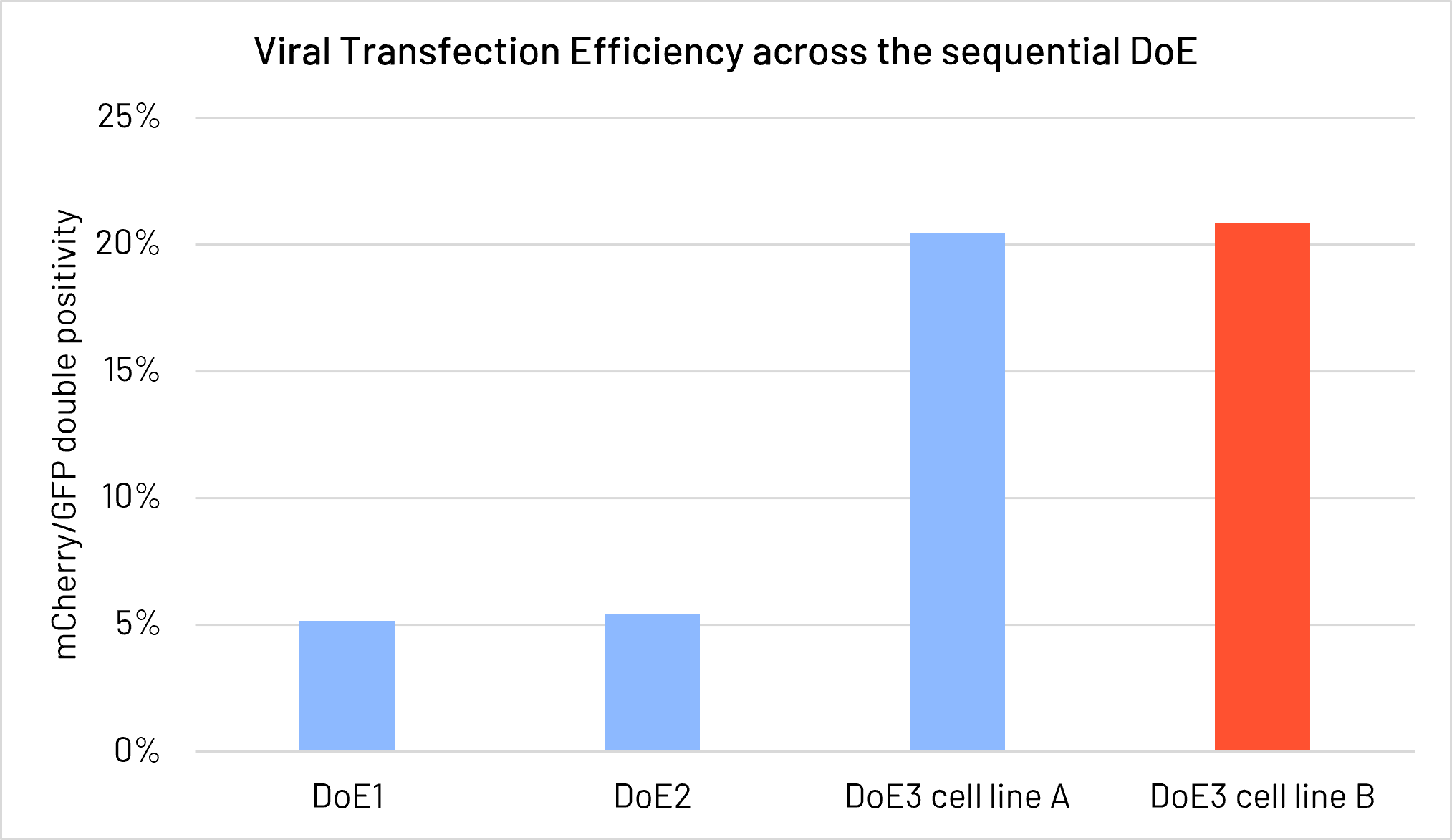
Transfection Efficiency, Viral Productivity, and Viral Quality were measured via at-line and off-line analyses. Samples collected by Numera® were analyzed by qPCR and flow cytometry. mCherry/GFP double positivity at 24 h post-transfection was used as the readout to compare transfection efficiency between the different experimental conditions. As shown in Figure 6, an improvement in transfection efficiency was observed across the sequence of DoE refinements.
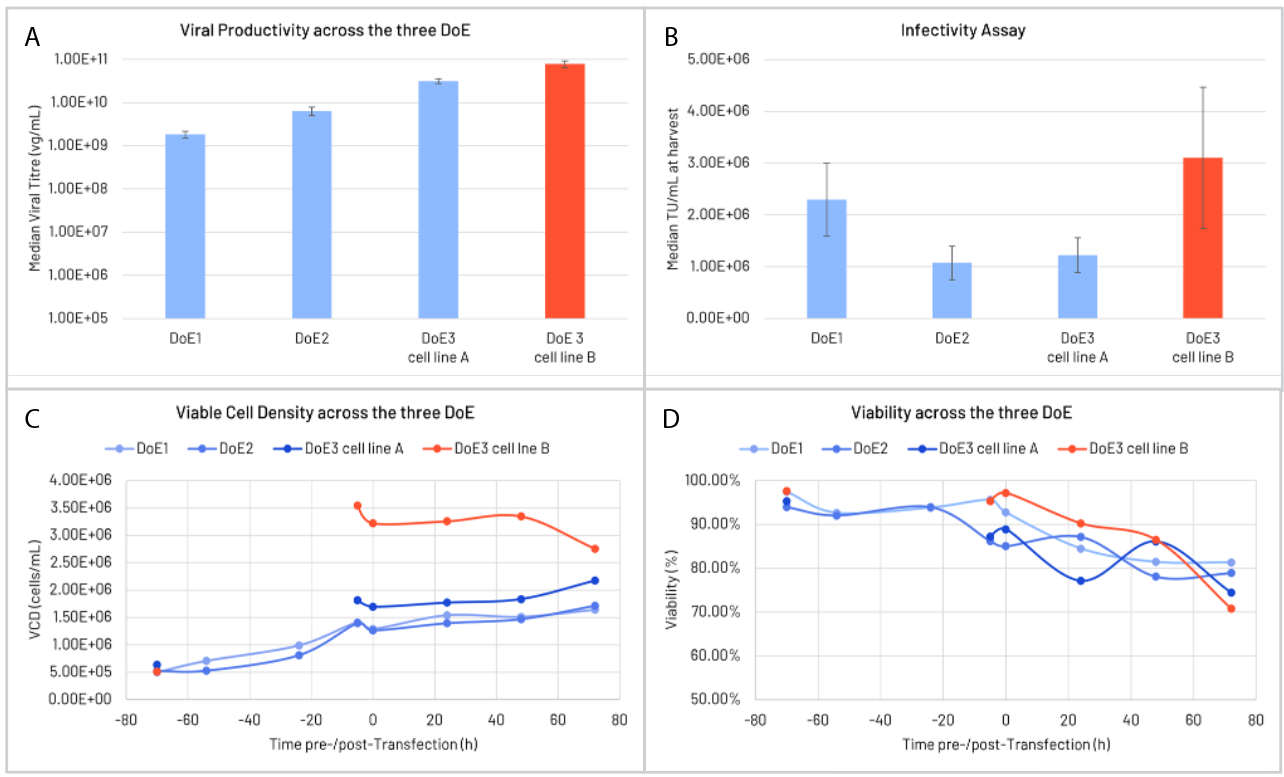
The Viral Titre was quantified by qPCR during the culture and at harvest. As observed on transfection efficiency, a general improvement on productivity, quality, and viability was registered across the experimental campaign (Figure 7).
Altogether, these results showcase that the refinement of the DoE experiments resulted in an optimization of AAV critical quality attributes.
A-TEEM as a soft-sensor to estimate CQA
A-TEEM (Absorbance-Transmittance Excitation-Emission Matrix) spectroscopy is an analytical technique that simultaneously acquires absorbance, transmittance, and fluorescence excitation and emission data. It can be used as a Process Analytical Technology (PAT) tool for real-time bioprocess monitoring.
The excitation-emission matrix (EEM) data enables the detection of naturally fluorescent compounds, including proteins, enzymes, and vitamins, with several orders of magnitude higher sensitivity than vibrational spectroscopic techniques such as Raman spectroscopy.
Absorbance measurements provide complementary information on the physicochemical properties of the sample from both fluorescent and non-fluorescent species. In addition, absorbance data are used to correct for the inner filter effect, which occurs when molecules in the sample absorb part of the excitation or fluorescence light, causing the measured fluorescence signal to appear lower than its true value. Correcting for this effect improves the accuracy and reproducibility of fluorescence measurements, particularly in highly concentrated or complex biological samples.
Multivariate and machine-learning models applied to the combined EEM and absorbance data can provide highly sensitive and specific predictions of key process parameters, enabling continuous monitoring of cell growth, viability, and metabolic activity.
HORIBA pioneered this technique with the patented Aqualog® system. In this study, the Aqualog® was integrated with both Lucullus® and Numera®. Samples were automatically drawn, diluted, and transferred by Numera® to the Aqualog®. Dilution was required to prevent Aqualog's sensors from saturating.
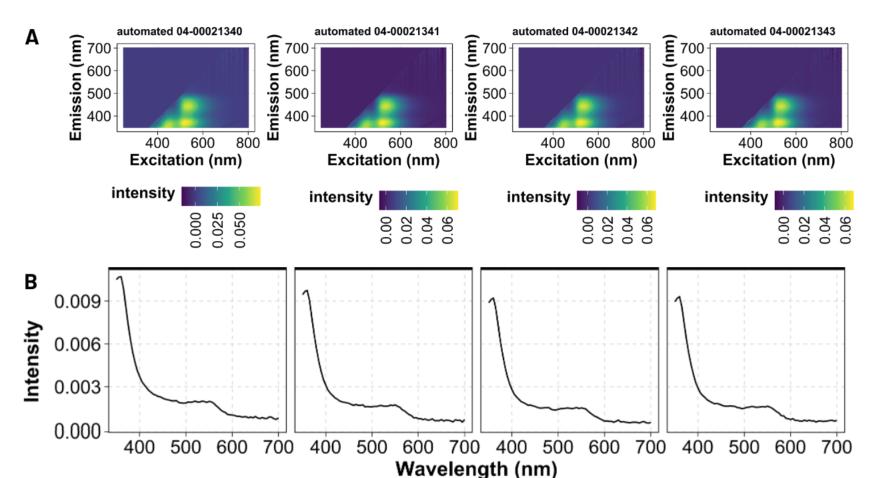
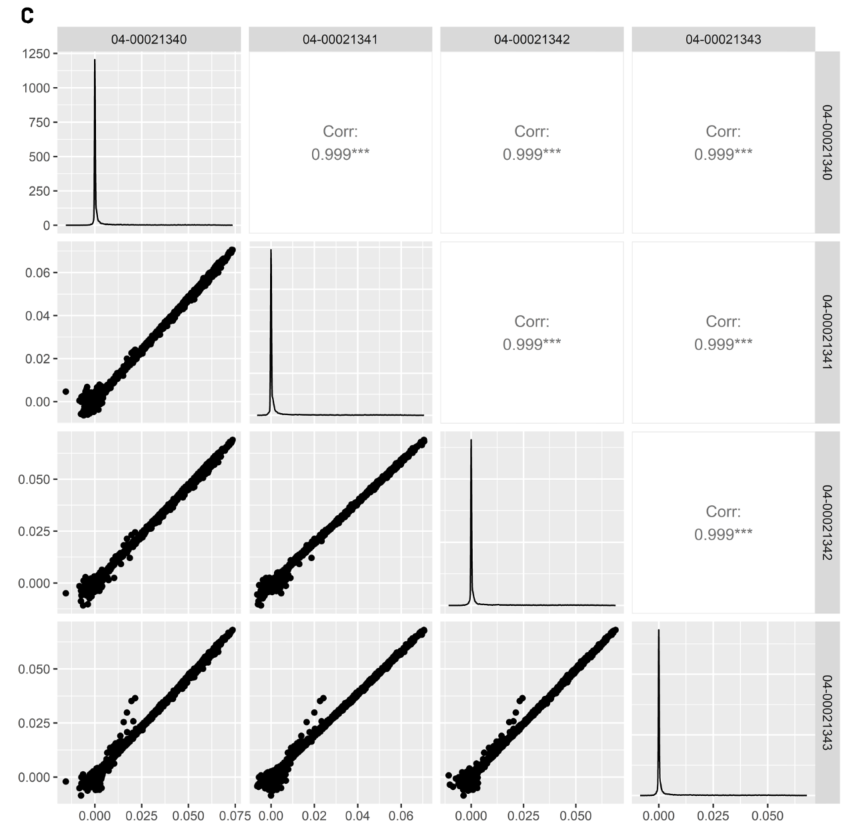
Figure 8: Example of Excitation-Emission (A), Absorbance data (B), and a correlation plot (C) to compare technical replicates. All the data were generated by HORIBA Aqualog® from samples collected by Numera®.
In addition to real-time process monitoring, models built on A-TEEM data can be used to predict critical quality attributes (CQAs) of AAV production. In this work, collaborators developed an early-stage model to predict transfection efficiency (defined as the percentage of mCherry/GFP double-positive cells measured by flow cytometry) and productivity (viral titer, measured by qPCR). The model was integrated into spectral interpretation software, and its predictions were subsequently transferred to Lucullus® via automated data parsing.
Despite being trained on a relatively small dataset (n = 64), the model achieved good predictive performance, with a coefficient of determination (R²) of 0.7. Model accuracy is expected to improve as additional process data is incorporated through iterative training and model refinement.
Conclusion
Digitalization and automation of a multi-vendor technology stack for ATMP process development presents significant integration challenges that require close collaboration with the right technology partners. This work demonstrated the successful integration of Numera® within a heterogeneous process environment, supporting multiple integration interfaces and enabling automated bioreactor sampling, processing, and analytics.
By enabling reproducible, time-scheduled sampling across multiple vessels with minimal operator intervention, the setup reduced manual handling time and variability, improved sampling consistency, and increased the temporal resolution of at-line and off-line analytics. Seamless integration with the Lucullus® software further allowed precise time-alignment between sampling events and process data (pH, DO, feeding), strengthening data traceability and comparability across conditions. Together, these capabilities enabled more robust process interpretation and built a stronger data foundation for modeling and control strategies.
The data gathered enabled multiple iterations and the refinement of a series of Design of Experiments studies, leading to enhanced AAV production. This research confirms the method's effectiveness at scale and acts as a model for more intelligent and data-driven development of AAV processes.
Contributor List
-
Securecell AG: Manuel Cantero, Nicolas Scalbert, Pascal Vonlanthen, Peter Dalmeida, Riccardo Francescato, Sebastian Von Rotz.
-
CGT Catapult: Elvita Blinova, John Churchwell, Joseph Oddy, Marta Tiburcio Lopez, Paa Kwesi Ogoe, Rolando Matos, Sharad Menon, Vincenzo di Cerbo.
-
HORIBA: Andy Keating, Giorgia Marucci, Karen Gall.
-
DataHow AG: Elena Lietta, Fabian Feidl.
-
National Physics Laboratory: Alex Jones.





References
-
Chahal, P. S., Schulze, E., Tran, R., Montes, J., & Kamen, A. A. (2014). Production of adeno-associated virus (AAV) serotypes by transient transfection of HEK293 cell suspension cultures for gene delivery. Journal of Virological Methods, 196, 163–173. https://doi.org/10.1016/J.JVIROMET.2013.10.038
-
Charan, N., Kowshik, S. S., & Singh, P. (2025). Advancing AAV vector manufacturing: challenges, innovations, and future directions for gene therapy. Frontiers in Molecular Medicine, 5, 1709095. https://doi.org/10.3389/FMMED.2025.1709095
-
Fu, Q., Polanco, A., Lee, Y. S., & Yoon, S. (2023). Critical challenges and advances in recombinant adeno-associated virus (rAAV) biomanufacturing. Biotechnology and Bioengineering, 120(9), 2601–2621. https://doi.org/10.1002/BIT.28412;WEBSITE:WEBSITE:ANALYTICALSCIENCEJOURNALS;ISSUE:ISSUE:DOI
-
Li, C., & Samulski, R. J. (2020). Engineering adeno-associated virus vectors for gene therapy. Nature Reviews Genetics 2020 21:4, 21(4), 255–272. https://doi.org/10.1038/s41576-019-0205-4
-
Moldavskii, D., Gilazieva, Z., Fattakhova, A., Solovyeva, V., Issa, S., Sufianov, A., Sufianova, G., & Rizvanov, A. (2025). AAV-Based Gene Therapy: Opportunities, Risks, and Scale-Up Strategies. International Journal of Molecular Sciences 2025, Vol. 26, Page 8282, 26(17), 8282. https://doi.org/10.3390/IJMS26178282
-
Rumachik, N. G., Malaker, S. A., Poweleit, N., Maynard, L. H., Adams, C. M., Leib, R. D., Cirolia, G., Thomas, D., Stamnes, S., Holt, K., Sinn, P., May, A. P., & Paulk, N. K. (2020). Methods Matter: Standard Production Platforms for Recombinant AAV Produce Chemically and Functionally Distinct Vectors. Molecular Therapy - Methods & Clinical Development, 18, 98–118. https://doi.org/10.1016/J.OMTM.2020.05.018
-
Woods, D. (2024). It’s a match: cell line engineering for AAV manufacturing expands the options for therapeutic programs. Cell and Gene Therapy Insights, 10(05), 879–888. https://doi.org/10.18609/CGTI.2024.098