Mohi Ahmadinia
Connecting Science, Technology and People: Highlights from the 6th Learn & Connect Seminar on Bioprocessing
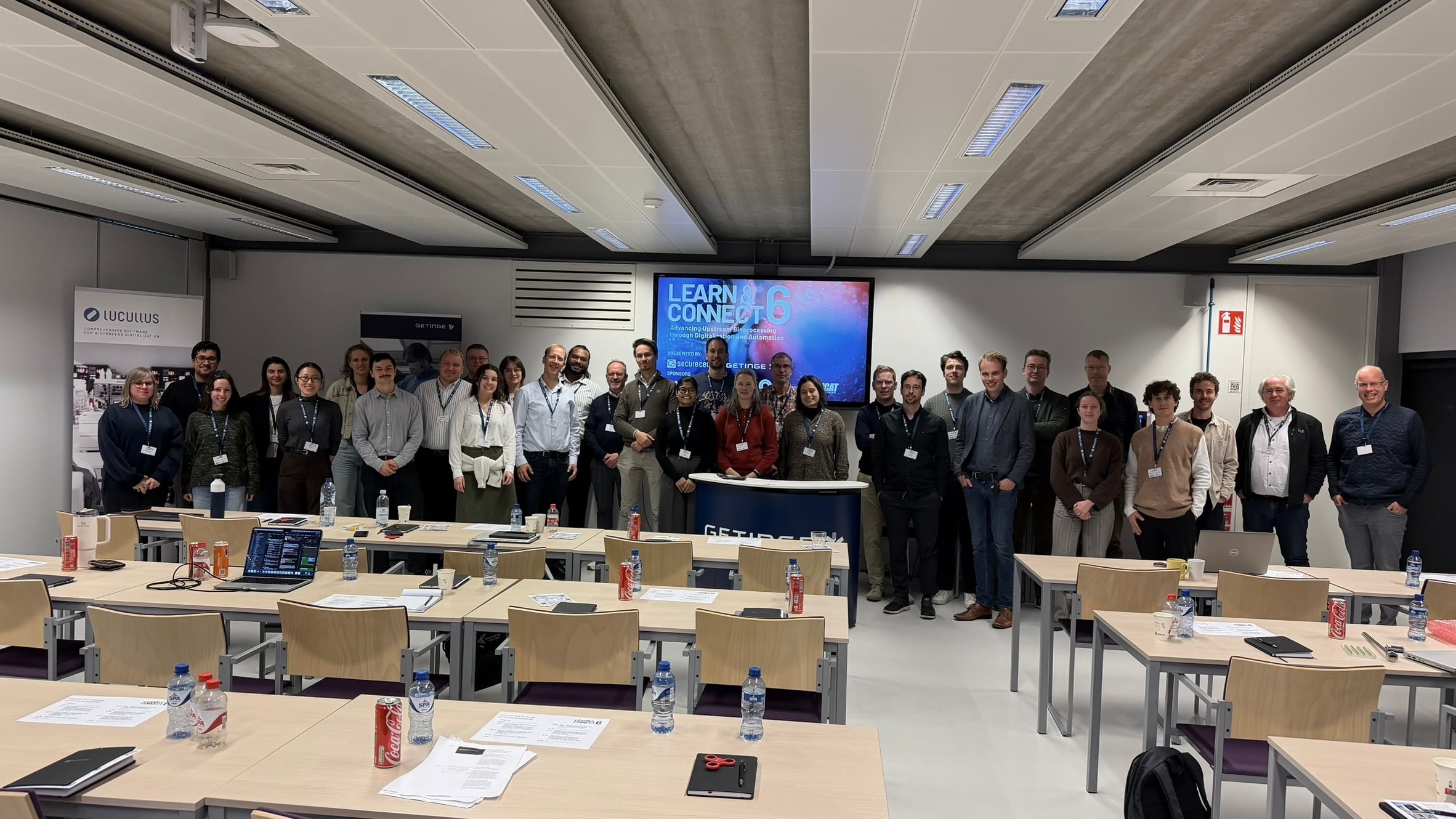
On November 25, 2026, Securecell and Getinge – Applikon welcomed bioprocessing professionals, scientists, researchers, technology experts, and industry partners to the 6th Learn & Connect Seminar on Bioprocessing in Delft, the Netherlands.
Under the theme “Advancing Upstream Bioprocessing through Digitalization and Automation” the seminar brought together academia and industry for a full day of scientific presentations, interactive workshops, laboratory tours, technology demonstrations, and valuable networking opportunities.
The event provided an open, science-driven environment to explore emerging technologies, exchange practical experiences, and discuss how digitalization, automation, advanced process control, and innovative analytical technologies are shaping the future of biomanufacturing.
From Offline Models to Online Decisions
Following a warm welcome from the organizing teams of Securecell and Getinge – Applikon, the scientific program began with a joint presentation by Ana Helena Valdeira Caetano and Philipp Pably, PhD candidates at the Technical University of Denmark (DTU), Department of Chemical and Biochemical Engineering.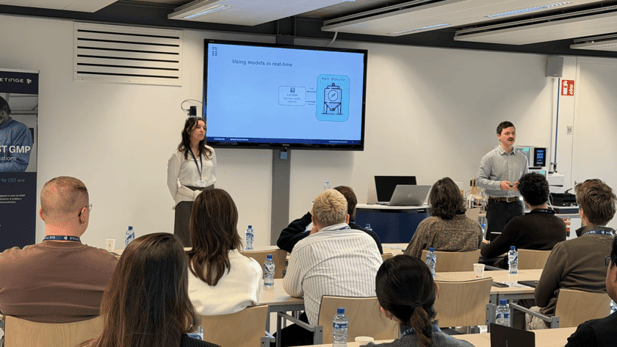
In their presentation, “From Offline Models to Online Decisions: Advanced Model Applications for Bioprocesses,” they explored how mathematical models can move beyond conventional offline process development and optimization to actively support decision-making during cultivation.
Drawing on their research in DTU's digitalized and automated laboratory and pilot plant environments, they shared insights into advanced model applications, ranging from model-based design of experiments (MBDoE) to model predictive control (MPC).
Their presentation highlighted how integrating process models into active cultivation workflows can help guide processes toward desired operating conditions, respond to deviations, and enable more intelligent and adaptive control strategies. These approaches offer significant potential for improving process understanding, efficiency, and reproducibility in future biomanufacturing.
Understanding Oxygen Demand to Enable Scalable Blood Cell Production
The second scientific presentation was delivered by Brenda Juárez Garza, PhD candidate at Delft University of Technology (TU Delft), on “Online Oxygen Consumption Rate Measurements to Facilitate Scalability of Blood Cell Production.”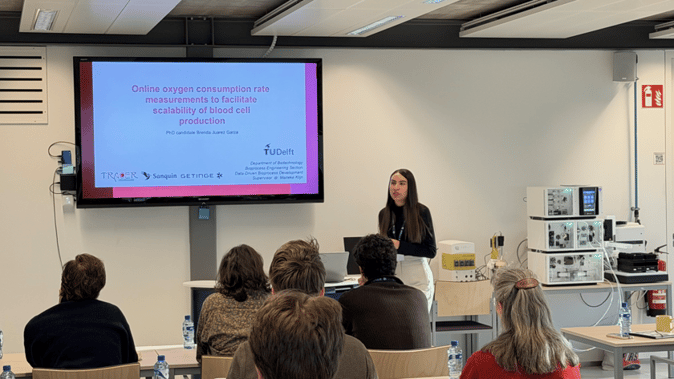
Her research focused on monitoring oxygen consumption during the differentiation of induced pluripotent stem cells (iPSCs) into hematopoietic stem and progenitor cells (HSPCs).
Brenda presented approaches for measuring oxygen consumption rates across different cultivation systems, using the Resipher system from Lucid Scientific in 96-well plates and the Kuhner TOM system in shake flasks.
By combining these measurements with automated volumetric oxygen mass transfer coefficient (kLa) determination in stirred-tank bioreactors, the research enabled the calculation of the oxygen transfer requirements necessary to support process scale-up.
The presentation provided an excellent example of how advanced online monitoring, automated measurements, and engineering principles can address practical challenges in stem cell bioprocess development and support the scalable production of therapeutic cells.
Experiencing Bioprocess Automation in Action
Moving from scientific theory to practical applications, the morning continued with an interactive workshop at Getinge – Applikon.
Participants had the opportunity to explore complementary bioprocessing technologies through live demonstrations and direct discussions with product and application specialists.
Numera® 3 – Automated Sampling and Online Analytics
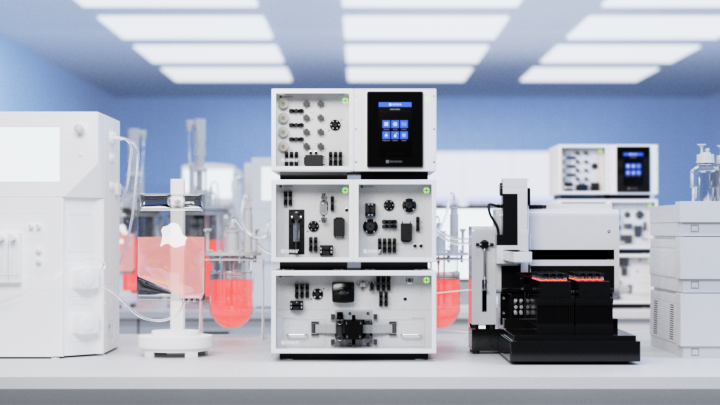
The live demonstration of Securecell's latest generation of automated sampling technology showcased how automated sample collection, preparation, and integration with analytical instruments can support more efficient bioprocess monitoring.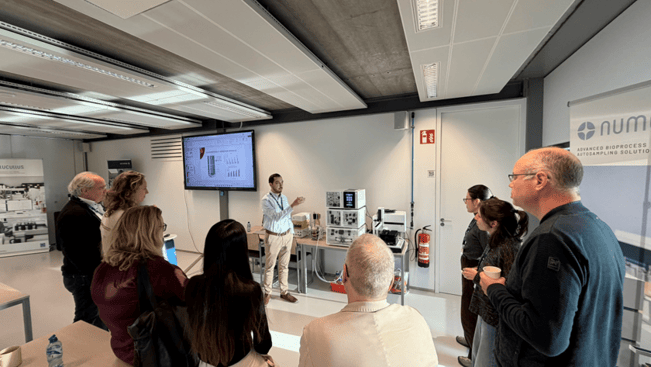
Participants gained insights into how automated sampling can reduce manual intervention, improve sampling consistency, increase analytical frequency, and provide valuable process information for advanced monitoring and control strategies.
Lucullus® – Connected and Intelligent Bioprocess Control
The Lucullus® software demonstration highlighted the benefits of connecting bioreactors, analytical instruments, and laboratory equipment within a centralized, vendor-independent software environment.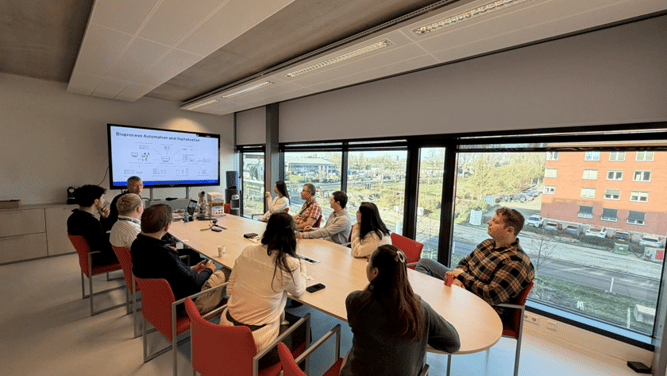
Participants explored the possibilities of automated process execution, real-time data acquisition, centralized process monitoring, and advanced control strategies, illustrating how digitalization can simplify complex bioprocessing workflows.
Getinge – Applikon Bioreactor Technologies
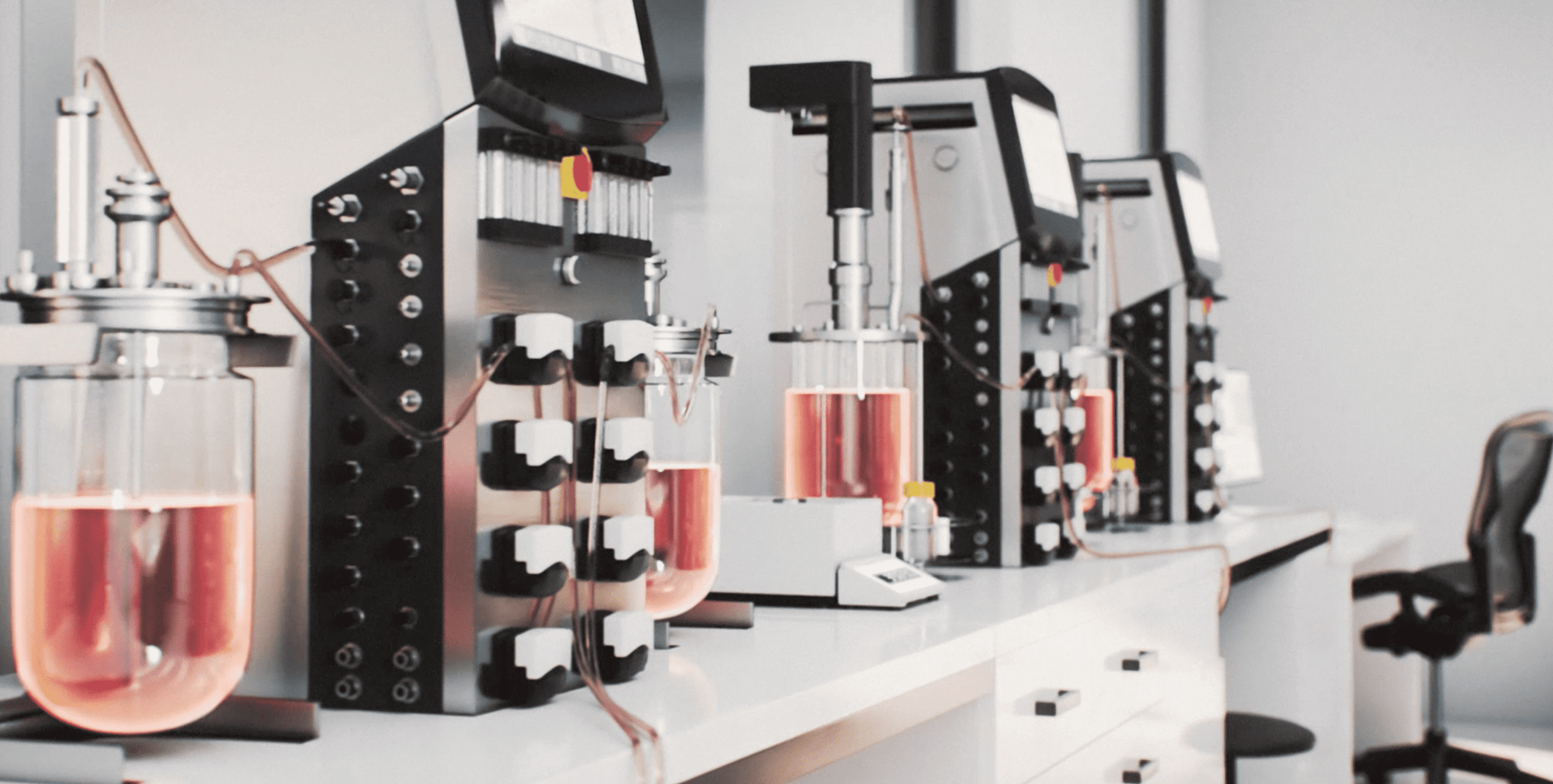
Getinge's specialists introduced participants to their bioreactor technologies and process control solutions, highlighting the importance of flexible cultivation platforms, reliable process instrumentation, and scalable equipment configurations.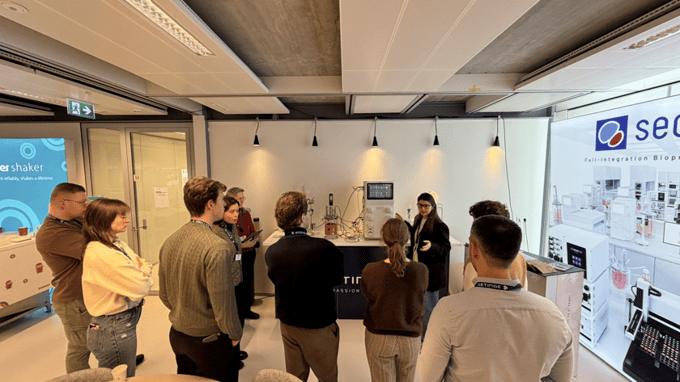
The workshop demonstrated how bioreactor technologies, automated sampling, analytical instrumentation, and software integration can work together to create a connected bioprocessing environment.
Behind the Scenes at TU Delft
After lunch and further opportunities for networking, participants continued their journey with a walk to the TU Delft campus.
With an introduction by Christiaan Mooiman, Research Technician at TU Delft and Marieken Tack (PhD candidate at TU Delft ) participants were welcomed into the university's bioprocessing facilities.
The guided tours of the bioprocessing research laboratories and the bioprocess training laboratory offered an opportunity to discover the environment in which scientific research, bioprocess development, practical education, and engineering expertise come together.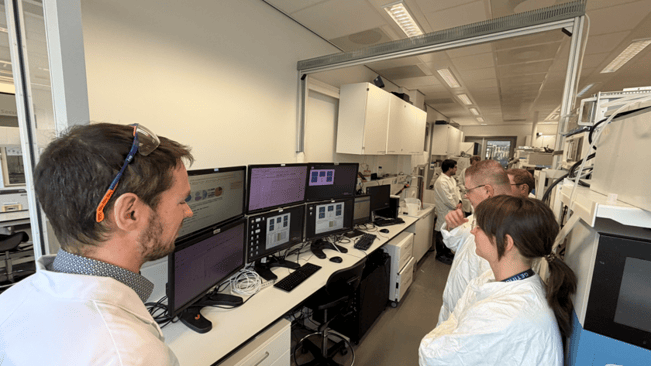
The visits provided a valuable perspective on the relationship between academic research and industrial applications, emphasizing the importance of practical training in developing the next generation of bioprocessing professionals.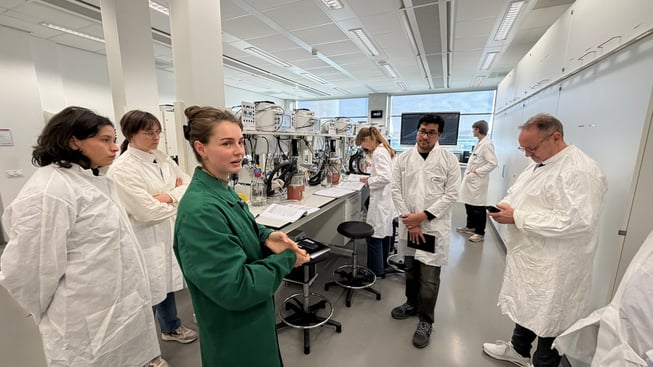
A dedicated poster presentation session complemented the laboratory tours, creating additional opportunities for technical discussions, knowledge exchange, and direct interaction with technology experts.
Industry Perspectives and Innovative Technologies
The afternoon program continued with presentations from our four event sponsors: Alicat Scientific, DataHow, Kuhner Shaker, and Hamilton.
Each company contributed its expertise and perspectives on complementary technologies relevant to modern bioprocessing, covering areas such as precision gas flow control, advanced data analytics and process modeling, cultivation and shaking technologies, and innovative process sensor solutions.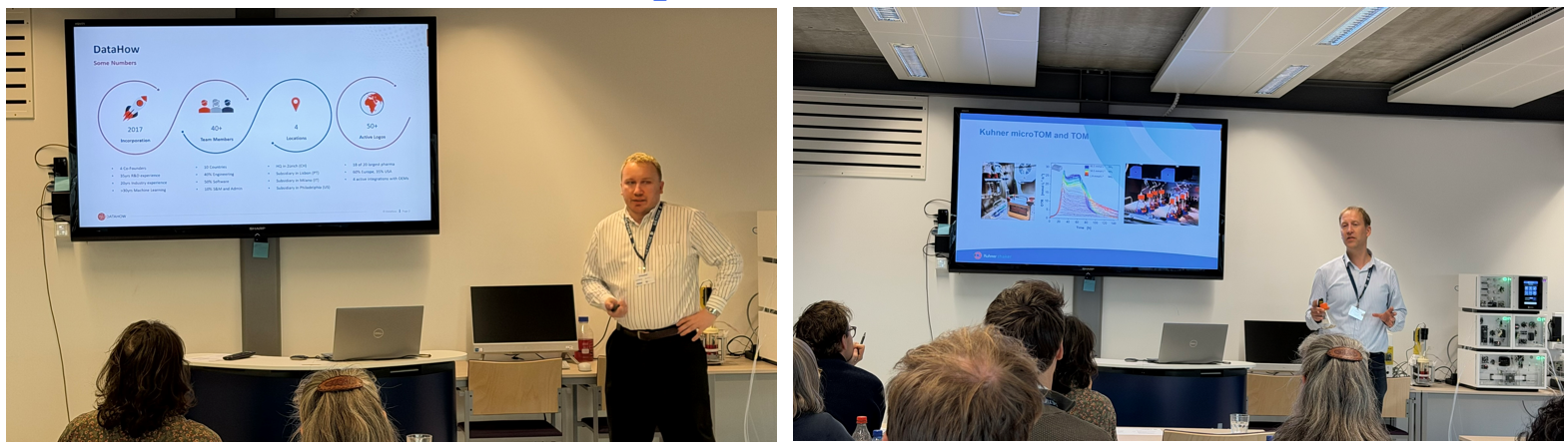
These contributions highlighted the importance of collaboration between technology providers in developing more integrated, efficient, and data-driven bioprocessing solutions.
Creating New Opportunities in Advanced Bioprocess Control
Dr. Karin Overkamp, Bioprocessing Specialist at Getinge, continued the scientific program with her presentation, “Advancing Bioprocess Control: Integrating Software-Hardware Architectures to Create New Control Options.”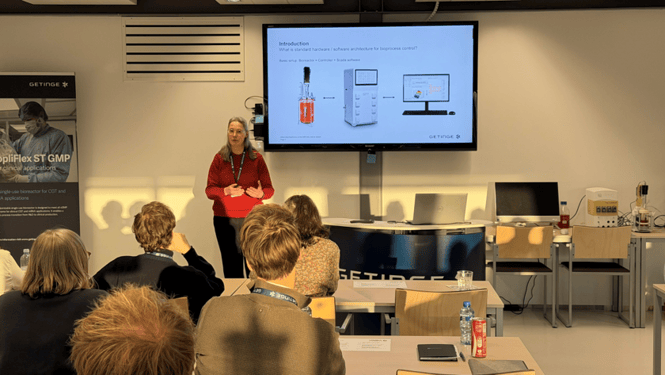
Her presentation addressed the importance of bringing software and hardware technologies closer together to enable more flexible and sophisticated bioprocess control.
As bioprocessing workflows become increasingly complex, seamless communication between cultivation equipment, sensors, analytical instruments, and software platforms is becoming essential.
Integrated architectures create opportunities to move beyond conventional control strategies toward more dynamic, data-driven approaches, supporting greater automation, process flexibility, and operational efficiency.
Manufacturing Biology with Smart Silicon
The final scientific presentation was delivered by Dr. Marcel Zevenbergen, Principal Member of Technical Staff and Technology Lead for (Bio)chemical Sensors at imec.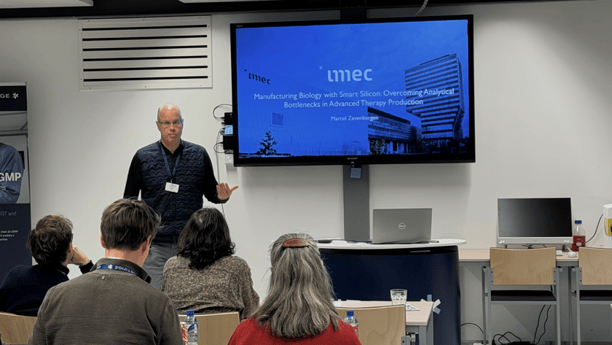
In his presentation, “Manufacturing Biology with Smart Silicon: Overcoming Analytical Bottlenecks in Advanced Therapy Production,” he explored the potential of semiconductor-based sensing technologies to address analytical challenges in advanced biomanufacturing.
Access to timely and reliable process information remains a significant challenge, particularly in the production of complex biological products and advanced therapies.
Innovative sensor technologies and the miniaturization of analytical systems offer promising opportunities to increase access to process information, strengthen process understanding, and support the development of more responsive monitoring and control strategies.
His presentation offered a forward-looking perspective on the convergence of biotechnology, microelectronics, and advanced analytical technologies.
Learning, Connecting and Building Future Collaborations
The seminar concluded with an informal networking session over snacks and drinks, allowing participants to continue scientific discussions, exchange experiences, establish new professional relationships, and explore opportunities for future collaboration.
Beyond the scientific presentations and technology demonstrations, the personal interactions throughout the day once again demonstrated the value of bringing together researchers, engineers, technology providers, and bioprocessing professionals in an open and collaborative environment.
A Heartfelt Thank You to Everyone Who Made This Event Possible
We would like to express our sincere gratitude to all participants, guest speakers, exhibitors, and contributors who joined us in Delft and made this seminar such a valuable experience.
A special thank you goes to our sponsors — Alicat Scientific, DataHow, Kuhner Shaker, and Hamilton — for their generous support, commitment, and active contributions. Their involvement was instrumental in making this event possible.
We extend our particular appreciation to the entire Getinge – Applikon team for their outstanding collaboration, hospitality, dedication, and tremendous efforts in co-organizing the seminar. From the event preparations to the practical workshops and on-site organization, their contribution was essential to its success.
We also sincerely thank the TU Delft team for welcoming us to their research and training facilities and providing participants with valuable insights into their bioprocessing environment.
Together, we continue to strengthen a community dedicated to advancing bioprocessing through scientific exchange, technological innovation, education, and collaboration.
Thank you for learning, sharing, and connecting with us. We look forward to welcoming you to our next Learn & Connect Seminar!
Event Presentations and Photos
You can access the follow-up materials below:
- Presentations (includes all decks we received permission to share)
- Event Photos
Learn & Connect History
Read and know more about the last Learn & Connect Seminars here
Mohi Ahmadinia