



From quality by testing to quality by design
The central message of the webinar was that quality should not be treated as a final inspection step. In bioprocessing, product quality is shaped continuously by raw materials, cell behaviour, process conditions, analytical methods, operator decisions, and automation strategies. QbD therefore starts with a structured definition of what quality means for the product and then translates that definition into development and manufacturing decisions.
The concept has roots in several decades of quality management, including ideas such as zero defects, continuous improvement, and Six Sigma. In the pharmaceutical and biopharmaceutical context, key regulatory milestones such as FDA initiatives on current Good Manufacturing Practice, PAT, and ICH guidelines helped shift industry thinking from “quality by testing” toward “quality by design”. The result is a framework that supports process understanding, scientific justification, and lifecycle-based quality management.
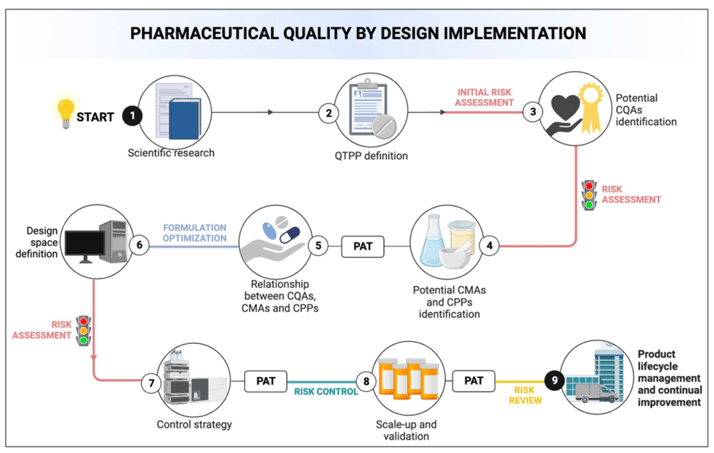
Figure 1. QbD connects product targets, process understanding, design space, control strategy, PAT, and lifecycle management [reference: Duarte et al. 2025].
Defining the target: QTPP and CQAs
This article describes the Quality Target Product Profile (QTPP) as the guiding reference point for the entire development and production team. It translates the intended clinical and product performance into concrete expectations, such as dosage form, strength, stability, bioavailability, and route of administration. Once the QTPP is defined, the next step is to identify the Critical Quality Attributes (CQAs): measurable physical, chemical, biological, or microbiological properties that must remain within defined limits to ensure product quality.
In a monoclonal antibody process, for example, CQAs may include product variants, glycosylation profiles, charge variants, purity, process-related impurities, endotoxins, viral particles, raw-material related risks, and packaging-related leachables. The key point is that CQAs are not selected arbitrarily. They are identified using prior knowledge, literature, platform-process experience, clinical relevance, and formal risk assessment.
.png?width=715&height=506&name=Figure%20(2).png)
Figure 2. Critical Quality Attributes translate product expectations into measurable quality criteria. [Reference:Alt et al. 2016]
Linking quality to process: CPPs and CMAs
After the CQAs have been defined, the process must be analysed to understand which variables can influence them. Critical Process Parameters (CPPs) are process parameters whose variability can affect one or more CQAs and therefore need to be monitored or controlled. Critical Material Attributes (CMAs) play the same role for raw materials and in-process materials.
This step is especially important in bioprocessing because biological systems are complex and often non-linear. Parameters such as temperature, pH, dissolved oxygen, feed strategy, induction timing, osmolality, nutrient concentration, cell density, and raw-material quality can interact with each other. The webinar emphasized that a broad initial risk assessment should be followed by screening experiments to separate critical from non-critical factors, and then by optimization designs to quantify relationships and interactions more precisely.
.png?width=715&height=499&name=Figure%20(3).png)
Figure 3. CPPs and CMAs are identified through risk assessment, screening, and optimization. [Reference: ICH Q8 (R2), 2004].
Design space: turning process understanding into flexibility
A major practical outcome of QbD is the establishment of a design space: the multidimensional combination of process parameters and material attributes that has been demonstrated to assure product quality. In simple terms, it is the operating region where all relevant CQAs remain within specification.
The webinar highlighted why design space matters strategically. If the design space is too narrow, future process optimization becomes difficult because even beneficial changes may require additional regulatory justification. If the design space is too broad, it may no longer reliably assure product quality. A well-defined design space gives development and manufacturing teams room to adapt to raw-material variability, economic pressure, process improvements, and scale-related constraints without compromising quality.
.png?width=715&height=519&name=Figure%20(4).png)
Figure 4. Design space defines the multidimensional operating region where CQAs remain within acceptable limits. [Reference: ICH Q8 (R2), 2004]
Experimental design: selecting the right tool for the right question
Design of Experiments (DoE) is one of the core tools used to build QbD process understanding. The webinar distinguished between screening designs and optimization designs. Screening designs, such as Plackett-Burman, fractional factorial, full factorial, and Latin hypercube sampling, are useful when the goal is to identify which variables matter most. Optimization designs, such as Box-Behnken and central composite designs, are typically used later, when the number of variables has been reduced and more complex effects need to be captured.
Stefan Hauer also discussed more advanced strategies, including Latin hypercube sampling, cyclic permutation designs, and intensified DoE. These approaches are particularly relevant when experiments are expensive, labour-intensive, or time-consuming, as is often the case for fermentation and cell culture processes. Intensified DoE, for example, can place several process set points into one fermentation experiment, reducing the total number of runs while still generating high-value process knowledge.
.png?width=1200&height=888&name=Figure%20(5).png)
Figure 5. Experimental design approaches differ depending on whether the goal is screening, optimization, calibration, or intensified process learning [Reference: Candioti et al., 2014].
.
PAT: the measurement foundation for real-time control
Process Analytical Technology (PAT) was presented as the bridge between process understanding and real-time process control. PAT includes systems for timely measurement of critical quality and performance attributes of raw materials, in-process materials, and process conditions. It is essential for defining relationships between CQAs and process parameters, and it becomes even more important when moving toward real-time release testing, continuous manufacturing, model predictive control, and digital twins.
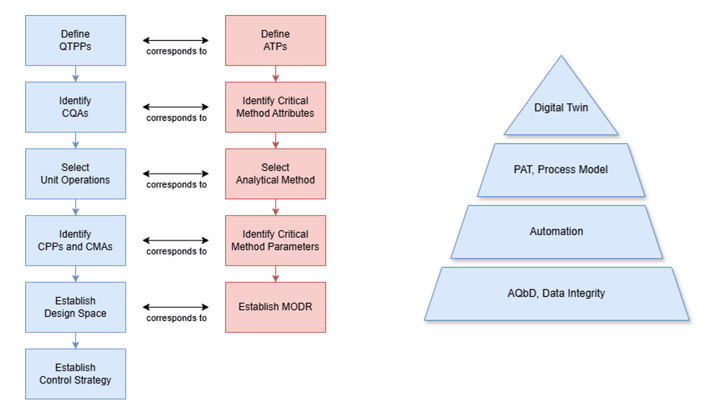
The webinar discussed spectroscopy-based approaches such as Raman, near-infrared, UV/Vis, and online HPLC. These methods can provide rapid and information-rich measurements, often with limited sample preparation. However, analytical methods also require a QbD mindset. Analytical Quality by Design applies the same principles to method development: define the analytical target profile, identify critical method attributes, select method parameters, and establish a method operable design region. This is particularly important when analytical data are used for real-time process decisions.
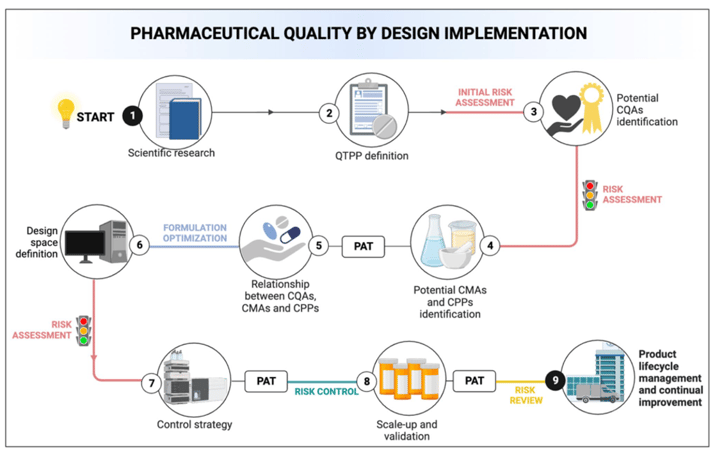
Figure 6. PAT provides the measurement layer needed for process transparency, digital twins, real-time release testing, and continuous manufacturing [reference: Duarte et al. 2025].
Digital twins: when models become part of the process
The webinar then moved from PAT to digital twins. A key clarification was the distinction between a digital model, a digital shadow, and a digital twin. A digital model has no automatic data exchange with the physical process. A digital shadow receives data from the process, but does not act back on it. A true digital twin requires two-way data exchange: the physical process informs the model, and the model can influence or update the physical process.
For bioprocessing, this distinction is important because a digital twin is not simply a dashboard or a predictive algorithm. It requires a model structure that can represent process behaviour, react to changing conditions, and support decisions across the process lifecycle. The webinar emphasized that mechanistic models are especially important because purely data-driven black-box models are often limited when extrapolation, process transfer, or mechanistic understanding is required.
.png?width=1192&height=478&name=Figure%20(6).png)
Figure 7. Digital model, digital shadow, and digital twin differ mainly in the direction and level of data exchange with the physical process.
Black-box models remain useful, especially when a process is not yet well understood or when rapid predictive performance is needed. However, they are often process-specific and difficult to reuse. Mechanistic and hybrid models can provide a stronger basis for extrapolation and process understanding. Hybrid modelling is particularly attractive because it can combine a mechanistic backbone with data-driven elements where first-principles understanding is incomplete.
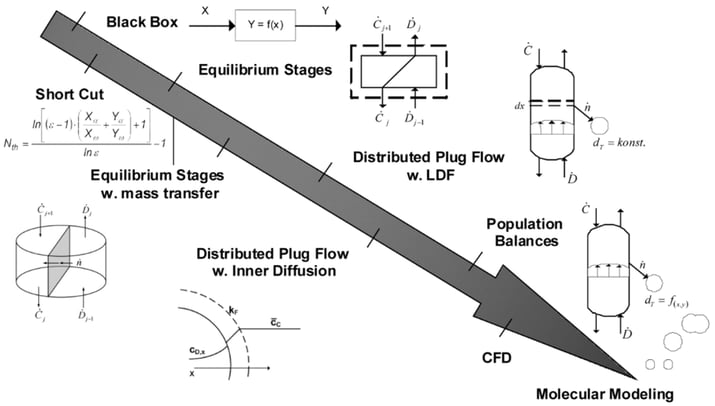
Figure 8. Mechanistic, data-driven, and hybrid models each play a role in model-based bioprocess development [Reference: Strube et al. 2011].
Why automation and data structure matter
In the final part of the webinar, Securecell positioned automation, analytics, and data integrity as the foundation for QbD implementation. Advanced concepts such as digital twins, PAT-based control, and model predictive control depend on a reliable lower layer: structured data, reproducible workflows, automated execution, robust analytics, and clear process documentation.
Lucullus was presented as a Process Information Management System and automation platform that can act as a single source of truth across upstream and downstream operations, online and offline measurements, analytical data, media information, unit operations, and process metadata. A structured naming strategy and consistent variable handling can make process data easier to access through APIs and more suitable for downstream modelling, reporting, and AI-based workflows.
.png?width=1285&height=382&name=Figure%20(8).png)
Figure 9. Lucullus can support QbD by consolidating process, analytical, and contextual data into a single source of truth.
Reducing manual variability with automated sampling and processing
The webinar also highlighted how automated sampling can strengthen PAT implementation.
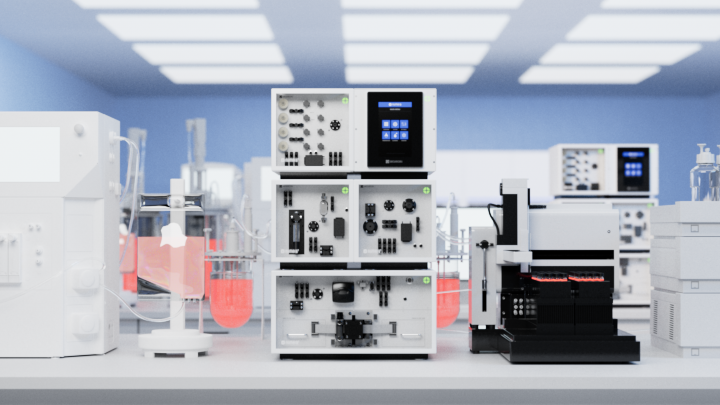
Numera can connect multiple bioreactors and automatically collect sterile samples, dilute or filter them, and send them to connected analyzers such as chemistry analyzers, cell counters, or spectroscopic flow cells. This reduces manual workload, improves sampling frequency, and creates more consistent data streams for process understanding and control.
Axon HT was presented as an emerging high-throughput solution for integration with Ambr 250 bioreactor systems [Ambr® is a registered trademark of “The Automation Partnership (Cambridge) Limited” ]. By combining automated sample collection, sample preparation, and analyzer integration, systems such as Numera and Axon HT can help close the gap between experimental design, analytics, and real-time process decision-making.
Conclusion
The webinar showed that QbD is more than a regulatory framework. It is a practical strategy for building process understanding and converting that understanding into robust, flexible, and data-driven bioprocess operations. By connecting QTPPs, CQAs, CPPs, CMAs, design space, PAT, mechanistic models, and automation, bioprocess teams can move toward more predictable development, more transparent manufacturing, and more reliable product quality.
The key message is clear: digital twins and advanced control strategies are only as strong as the data, analytics, and automation infrastructure beneath them. For organizations aiming to implement modern QbD workflows, the foundation must be built first — with structured data, reliable measurement, automated execution, and scientifically justified models.
Suggested call to action
Watch the full webinar recording to explore the complete QbD workflow, including examples of experimental design, design space definition, PAT implementation, and digital twin development in bioprocessing. Watch the webinar here
References
- Duarte et al. 2025 - Duarte, J. G., Duarte, M. G., Piedade, A. P., & Mascarenhas-Melo, F. (2025). Rethinking Pharmaceutical Industry with Quality by Design: Application in Research, Development, Manufacturing, and Quality Assurance. The AAPS Journal, 27, Article 96.
- Alt et al. 2016 - Alt, N., Zhang, T. Y., Motchnik, P., Taticek, R., Quarmby, V., Schlothauer, T., Beck, H., Emrich, T., Harris, R. J., et al. (2016). Determination of critical quality attributes for monoclonal antibodies using quality by design principles. Biologicals, 44(5), 291–305.
- ICH Q8 (R2), 2004 - International Conference on Harmonisation of Technical Requirements for Registration of Pharmaceuticals for Human Use (ICH). (2009). ICH Harmonised Tripartite Guideline: Pharmaceutical Development Q8(R2). Current Step 4 version, August 2009
- Candioti et al., 2014 - Candioti, L. V., De Zan, M. M., Cámara, M. S., & Goicoechea, H. C. (2014). Experimental design and multiple response optimization. Using the desirability function in analytical methods development. Talanta, 124, 123–138.
- Strube et al. 2011 - Chhatre, S., Farid, S. S., Coffman, J., Bird, P., Newcombe, A. R., Titchener-Hooker, N. J., & Strube, J. (2011). How implementation of Quality by Design and advances in biochemical engineering are enabling efficient bioprocess development and manufacture. Journal of Chemical Technology & Biotechnology, 86(9), 1125–1129